Unearthing Riches: The NSW and Victoria Gold Rushes of 1851

In the annals of Australian history, few events have left as indelible a mark as the gold rushes of the mid-19th century. Beginning in 1851, these frenzied quests for riches transformed the colonies of New South Wales (NSW) and Victoria, reshaping their landscapes, societies, and economies. Let’s delve into the significance of these gold rushes and their enduring impact on Australian history.

The NSW Gold Rush:

While NSW was not the epicenter of the gold rush phenomenon, it played a crucial role in sparking the frenzy. In February 1851, Edward Hargraves discovered gold near Bathurst, igniting excitement and triggering a rush of prospectors to the region. This discovery marked the beginning of Australia’s first gold rush.

The significance of the NSW gold rush lay not only in the precious metal unearthed but also in its role as a catalyst for the broader Australian gold rushes. Hargraves’ find demonstrated that Australia held vast untapped reserves of gold, inspiring prospectors to venture further afield in search of fortune.

The Victorian Gold Rush:

However, it was Victoria that would become the epicenter of the gold rush phenomenon, surpassing NSW in both scale and significance. In July 1851, gold was discovered in the streams near Clunes, sparking a rush that would transform the remote colony into a thriving hub of activity.

Victoria’s gold rush was characterized by its sheer magnitude. The discovery of rich gold deposits in Ballarat, Bendigo, and other areas drew fortune-seekers from across the globe, swelling the colony’s population and propelling it into economic prominence. The influx of migrants, including many from China, brought cultural diversity and contributed to the shaping of modern Australian society.

GABENSIS, NEW GUINEA, 1944-03-02. NG2464 WARRANT OFFICER II, HENRY J. O’KENE, AUSTRALIAN NEW GUINEA ADMINISTRATIVE UNIT REPRESENTATIVE AT GABENSIS, (1), A FORMER MINER IN THE GOLD RUSH 

Significance in Australian History:

The gold rushes of NSW and Victoria were pivotal moments in Australian history, leaving a profound and lasting impact on the nation. Here’s why they are considered significant:

  1. Economic Transformation: The gold rushes propelled Australia from a remote colonial outpost to a prosperous nation almost overnight. The influx of gold brought immense wealth, driving economic growth, infrastructure development, and urbanization.
  2. Population Growth and Diversity: The gold rushes triggered unprecedented population growth as people from all walks of life flocked to the goldfields in search of fortune. This influx of migrants, including Europeans, Americans, and Chinese immigrants, contributed to the cultural diversity that defines modern Australia.
  3. Political and Social Change: The gold rushes brought about significant political and social changes. The newfound wealth and population growth led to demands for greater autonomy and representation, ultimately paving the way for the democratization of the colonies and the eventual formation of the Australian nation.
  4. Environmental Impact: The gold rushes had profound environmental consequences, with widespread deforestation, erosion, and pollution resulting from mining activities. These environmental legacies continue to be felt today, underscoring the importance of sustainable resource management.

In conclusion, the gold rushes of NSW and Victoria were watershed moments in Australian history, shaping the nation’s identity, economy, and society in profound ways. Their legacy endures as a testament to the pioneering spirit and resilience of those who sought their fortunes in the rugged landscapes of the Australian colonies.

Watch this fantastic video from the national museum of Australia to learn more!

Unveiling the Castle Hill Rebellion of 1804: A Pivotal Moment in Australian History

In 1804 the nation experienced the This tumultuous uprising, shrouded in the complexities of colonial power dynamics and the struggle for freedom, stands as a testament to the resilience and determination of those who dared to challenge the status quo. As we delve into the depths of this historic rebellion, we uncover not only the events that transpired but also the profound implications it had on the course of Australian history.

To comprehend the significance of the Castle Hill Rebellion, one must first grasp the socio-political landscape of early 19th-century Australia. In the fledgling colony of New South Wales, tensions simmered among the disparate groups that populated its shores. Convicts, many of whom had been transported from Britain for crimes both real and imagined, toiled under harsh conditions, while a privileged elite, comprising military officers and colonial administrators, wielded power with impunity. Amidst this backdrop of inequality and oppression, discontent festered, laying the groundwork for rebellion.

The roots of the Castle Hill Rebellion can be traced to the oppressive policies of Governor William Bligh, whose despotic rule fuelled resentment among the convict population. Bligh’s heavy-handed tactics, including his attempts to curb the illicit trade in rum, earned him the ire of many, particularly those with vested interests in the flourishing rum trade. As tensions escalated, rumours of rebellion began to circulate, finding fertile ground among the disaffected.

On the fateful day of March 4, 1804, the simmering discontent erupted into open rebellion. Led by Irish convicts, who saw parallels between their own struggle for independence and the fight against British oppression in their homeland, a motley crew of rebels seized control of the government farm at Castle Hill. Armed with makeshift weapons and fueled by a fervent desire for freedom, they marched towards Sydney, intent on overthrowing the colonial authorities.

However, their plans were soon thwarted by a combination of strategic blunders and the swift response of government forces. The rebellion was swiftly crushed, with scores of rebels captured or killed in the ensuing conflict. Those who survived faced harsh reprisals, including public execution and exile to the distant reaches of the colony.

While the Castle Hill Rebellion may have been short-lived, its significance reverberated far beyond the confines of colonial New South Wales. It served as a stark reminder of the inherent injustices of the convict system and the deep-seated desire for freedom that burned within the hearts of those subjected to its tyranny. Moreover, it catalyzed efforts to reform the colonial administration, paving the way for greater political autonomy and democratic governance in the years to come.

In the tapestry of Australian history, the Castle Hill Rebellion occupies a prominent place, serving as a testament to the indomitable spirit of those who dared to defy the odds in pursuit of liberty. As we reflect on the events of 1804, let us remember the sacrifices made by those who fought for a brighter future, and let us draw inspiration from their courage as we continue the ongoing quest for justice and equality.

Remembering Harry “Breaker” Morant: A Notorious Chapter in Australian History

On February 27th, we solemnly mark a significant event in Australian history: the execution of Harry “Breaker” Morant. Over a century ago, on this day in 1902, Morant, a horseman, soldier, and poet, met his tragic fate at the hands of British authorities during the closing stages of the Second Boer War.

Born in England in 1864, Morant eventually found his way to Australia, where he became known for his equestrian skills and adventurous spirit. However, it was his involvement in the Boer War that would etch his name into the annals of history.

Photo by Joe Ambrogio on Pexels.com

Morant joined the Bushveldt Carbineers, a mounted infantry unit composed mainly of Australian volunteers, and quickly rose to prominence for his bravery and leadership on the battlefield. Yet, amidst the chaos of war, Morant and his compatriots found themselves embroiled in controversy.

Accusations of executing prisoners and civilians without trial tarnished Morant’s reputation and led to his arrest and subsequent court-martial. The trial, held in Pietersburg, South Africa, was fraught with controversy, with many questioning the fairness of the proceedings.

Despite pleas for clemency from the Australian public and prominent figures, including the Australian Prime Minister at the time, Edmund Barton, Morant, and his co-defendant, Peter Handcock, were sentenced to death. On that fateful day, February 27th, 1902, Morant and Handcock faced the firing squad, becoming martyrs in the eyes of many Australians.

The execution of Morant and Handcock left a profound impact on Australian society, sparking debates about loyalty, justice, and the relationship between Australia and Britain. It highlighted the complexities of war and the moral dilemmas faced by soldiers caught in its midst.

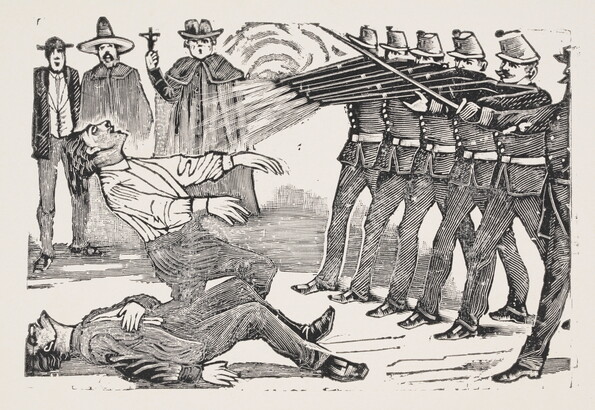
José Guadalupe Posada (1852-1913) [Firing squad] ca. 1890-1913
Relief print Amon Carter Museum of American Art, Fort Worth, Texas 1978.384.38

In the years following Morant’s death, his story captured the imagination of Australians, inspiring numerous books, plays, and films, including the iconic 1980 film “Breaker Morant,” directed by Bruce Beresford. These works sought to explore the man behind the myth, shedding light on the circumstances surrounding his life and death.

Today, Harry “Breaker” Morant remains a controversial figure, revered by some as a patriot and condemned by others as a war criminal. Regardless of one’s interpretation, his legacy endures as a reminder of the human cost of conflict and the enduring quest for justice.

As we reflect on this day in history, let us honor the memory of Harry “Breaker” Morant and never forget the sacrifices made by those who came before us in the pursuit of freedom and dignity

The Crucible of War: Examining the Impact of Conscription in Australia During World War II

World War II stands as one of the most pivotal periods in human history, a time when the world was plunged into a maelstrom of conflict and chaos. As nations rallied their resources and citizens to the cause, Australia found itself deeply embroiled in the struggle against tyranny. With the spectre of conscription looming large, the nation faced a profound moral and societal reckoning. In this blog post, we delve into the impact of conscription in Australia during World War II, exploring its significance in shaping the nation’s history and the lives of its people.

The Stage is Set: In the aftermath of World War I, Australia, like many nations, grappled with the scars of conflict and the daunting prospect of yet another global conflagration. As tensions mounted across the world in the late 1930s, the spectre of war once again cast its shadow over the Australian continent. With the outbreak of World War II in 1939, Australia swiftly rallied to support its allies and defend its shores against the rising tide of fascism.

The Call to Arms: As the war intensified and the demand for manpower grew, the Australian government faced the daunting task of bolstering its military ranks. While voluntary enlistment initially met the need for soldiers, the escalating demands of the war soon outpaced recruitment efforts. In response, the government turned to conscription as a means of meeting its military obligations.

The Divisive Debate: The introduction of conscription sparked fierce debate and controversy across Australia. While some saw it as a necessary measure to ensure the nation’s survival, others viewed it as an infringement on personal liberties and a betrayal of democratic principles. The issue divided communities, families, and even political parties, laying bare the deep-seated tensions simmering beneath the surface of Australian society.

Impact on Society: Conscription had far-reaching effects on Australian society, reshaping communities and altering the fabric of everyday life. Families faced the heart-wrenching prospect of loved ones being called away to war, while those left behind grappled with the uncertainty and fear that accompanied their absence. The social and economic impacts of conscription were profound, with industries mobilizing for war production and women taking on new roles in the workforce to fill the void left by departing soldiers.

The Human Cost: Beyond the logistical and economic implications, conscription exacted a heavy toll on the individuals who bore its burden. Young men, many barely out of their teens, found themselves thrust into the crucible of war, facing untold horrors on distant battlefields. For some, conscription meant the ultimate sacrifice, as they laid down their lives in service to their country. For others, it left lasting scars, both physical and psychological, that would haunt them long after the guns fell silent.

Photo by Henry Han on Pexels.com

Legacy and Importance: The legacy of conscription in Australia during World War II looms large in the nation’s history, serving as a poignant reminder of the sacrifices made by past generations in defence of freedom and democracy. It remains a symbol of the resilience and determination of the Australian people in the face of adversity, and a testament to the enduring values that bind the nation together.

Conclusion: As we reflect on the impact of conscription in Australia during World War II, we are reminded of the profound influence that war can exert on societies and individuals alike. It is a story of sacrifice and struggle, of courage and resilience in the face of overwhelming odds. And as we honour the memory of those who served, let us also reaffirm our commitment to the ideals for which they fought, ensuring that their legacy endures for generations to come.

Remembering Black Thursday: Australia’s Historic Bushfire Catastrophe

In the annals of Australian history, few events are as profoundly etched into the nation’s collective memory as the Black Thursday bushfires of 1851. This cataclysmic event not only left a trail of devastation in its wake but also served as a sobering reminder of the immense power and destructive force of bushfires in Australia.

The Inferno Unleashed

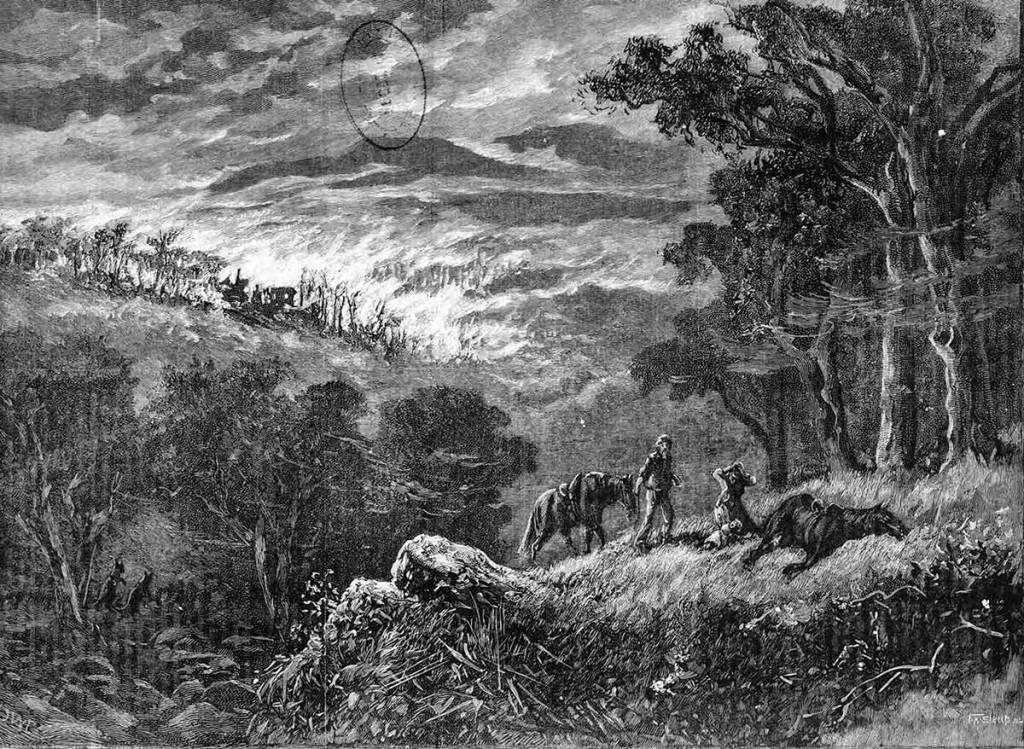
January 6, 1851, dawned ominously across the Australian state of Victoria. The tinder-dry conditions, exacerbated by a prolonged drought, set the stage for what would become one of the most devastating bushfire events in the nation’s history. As temperatures soared and strong winds whipped through the landscape, a series of fires ignited across vast swathes of land.

The inferno raged unchecked for days, consuming everything in its path with an insatiable appetite. Towns and settlements were engulfed in flames, homes reduced to ash, and livelihoods destroyed in a matter of hours. The sky turned an eerie shade of red as smoke blanketed the horizon, casting a pall of darkness over the land.

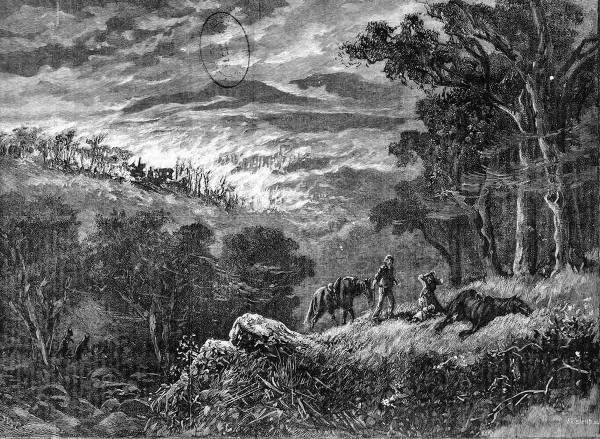
BLACK THURSDAY, FEBRUARY 1851 (1888). Engraver: F.A. Sleap. Image courtesy of the State Library of Victoria http://handle.slv.vic.gov.au/10381/47777

The Impact and Aftermath

The toll of Black Thursday was staggering. Estimates suggest that over 5 million hectares of land were scorched, an area equivalent to roughly a quarter of present-day Victoria. Lives were lost, with accounts of both human and animal casualties haunting the survivors for years to come. The economic repercussions were equally devastating, as entire communities grappled with the aftermath of widespread destruction.

Moreover, the ecological impact of the fires was profound, reshaping the landscape and forever altering the delicate balance of ecosystems. Native flora and fauna were decimated, and the scars of the fires would remain etched into the land for generations to come.

A Turning Point in History

Black Thursday marked a turning point in Australia’s history, serving as a stark reminder of the inherent dangers posed by bushfires in the Australian landscape. It sparked a newfound urgency in fire management and prevention efforts, leading to the establishment of fire brigades and the adoption of more rigorous firefighting strategies.

Furthermore, the event catalyzed a shift in public perception, fostering a deeper appreciation for the fragility of Australia’s natural environment and the need for sustainable land management practices. The resilience and determination displayed by communities in the face of adversity served as a testament to the indomitable spirit of the Australian people.

THE BUSH ON FIRE (1865). Image courtesy of the State Library of Victoria http://handle.slv.vic.gov.au/10381/236426

Challenges and Continuity

Despite significant advancements in fire management techniques, the threat of bushfires continues to loom large over Australia. Climate change has exacerbated the risk, leading to longer and more intense fire seasons and increasing the frequency of extreme weather events. Urban sprawl into bushland areas further complicates matters, placing additional strain on firefighting resources and exacerbating the potential for catastrophic loss.

Addressing the challenges posed by bushfires requires a multifaceted approach, encompassing proactive measures such as fuel reduction burns, investment in firefighting infrastructure, and community education and preparedness initiatives. Additionally, a concerted effort to mitigate the impacts of climate change is paramount, as the long-term viability of Australia’s ecosystems hangs in the balance.

Conclusion

The legacy of Black Thursday endures as a somber reminder of the destructive power of nature and the resilience of the human spirit. As Australia grapples with the ongoing threat of bushfires, it is imperative that we draw upon the lessons of the past to forge a path towards a more resilient and sustainable future. Only through collective action and unwavering determination can we hope to confront the challenges that lie ahead and safeguard the precious landscapes that define this great nation.

Title: “The Great Emu War: Unravelling the Feathery Battlefield of Australian History”

It’s 1932, post-World War I, and Australia is grappling with the aftermath of the Great Depression. Times are dire, families are struggling its not a faithful era throughout Australia. In the rural landscapes of Western Australia, a very unique and unexpected conflict unfolds, one that involves not human adversaries, but the flightless and seemingly harmless emus.

But before we delve into the war, let’s set the stage. Why were the emus causing such a fuss, and how did they become the centre of attention in Australian history?

Emus, native to Australia, were faced with a significant challenge during the 1930s. The end of World War I had seen many Australian soldiers returning home, and the government, in an attempt to assist them, offered land for farming. This was both a reward and opportunity to rebuild their lives after fighting for our country. The catch? These soldiers were given land in Western Australia, particularly around Campion and Walgoolan, areas that also happened to be prime emu territory.

The emus, with their large numbers and ravenous appetites, soon found the newly cultivated farmlands to be a paradise. There were crops and farmlands in abundance, this was a dream come true for the farmers. But a nightmare of disappearing crops and flocks upon flocks of emus destroying their farmland. Unfortunately, this led to a clash between the farmers and the emus, as the feathered invaders wreaked havoc on crops, destroying fences and decimating the livelihoods of those struggling to make ends meet.

Photo by alexandre saraiva carniato on Pexels.com

Enter Major G.P.W. Meredith, a war veteran and farmer, who was tasked with finding a solution to the emu problem. The Australian government, in an attempt to curb the growing emu population, provided Meredith with two Lewis machine guns and 10,000 rounds of ammunition. Yes, you heard that right – machine guns against emus.

The plan was simple, use the machine guns to thin out the emu population and protect the farmers’ crops. However, what seemed straightforward on paper turned out to be a comical and ultimately futile Endeavor.

The battlefield? The vast and open plains of Western Australia. The emus, known for their agility and speed, proved to be formidable opponents. The soldiers found it challenging to target the fast-moving birds, and the emus, displaying their own brand of military tactics, often scattered in all directions, making them difficult to pin down.

The emus were quick learners, adapting to the soldiers’ strategies. They would split into smaller groups, making it nearly impossible for the machine guns to make a significant impact. Absolutely frustrated and stunned, the soldiers were using up ammunition, funds, time and not getting any results with the crops still suffering and farmlands destroyed.

Despite their best efforts, the soldiers, after a few weeks of engagement, realized the futility of the campaign. After two months, fewer than 1,000 emus were reported killed. The media back home caught wind of the peculiar conflict, and soon, the Great Emu War became a source of both amusement and embarrassment for the Australian government.

In the end, the government decided to withdraw its forces from the emu battleground. Major Meredith himself admitted defeat, stating that the emus were “invulnerable to bullets.” The war, was over.

Photo by Ozgur Camurlu on Pexels.com

So, why do we still talk about the Great Emu War today? Well, beyond its sheer absurdity, the event highlights the challenges faced by Australia during the Great Depression. It also serves as a reminder of the delicate balance between human development and the preservation of native wildlife.

Today, emus roam freely in Australia, protected by conservation efforts and admired for their unique place in the country’s natural heritage. The Great Emu War may have been a humorous footnote in history, but it also raises important questions about human-wildlife interactions and the consequences of our attempts to control nature.

And there you have it, mates the fascinating and bizarre tale of the Great Emu War. If you enjoyed this deep dive into history, don’t forget to hit that like button, subscribe for more content, and let us know in the comments which historical events you’d like us to explore next.

Willem Janszoon: Pioneering the Mapping of Australia’s Coastline

In the annals of history, certain figures stand out as trailblazers, whose courageous voyages redefine our understanding of the world. One such pioneer is Willem Janszoon, a Dutch explorer whose journey in the early 17th century marked a pivotal moment in Australia’s history. As the first European to map parts of Australia’s coastline, Janszoon’s expedition had far-reaching implications, shaping the course of exploration and colonization in the continent’s vast expanse.

Willem Janszoon embarked on his historic voyage aboard the Duyfken in 1606, commissioned by the Dutch East India Company to chart new trade routes in the East Indies. Little did he know that his journey would lead him to the shores of a mysterious landmass, previously unknown to Europeans. Sailing along the northern coast of Australia, Janszoon encountered the rugged terrain and unfamiliar landscapes that would forever alter the course of history.

Upon reaching the western shores of Cape York Peninsula, Janszoon and his crew made landfall, becoming the first Europeans to set foot on Australian soil. Their encounters with the indigenous inhabitants, whom they referred to as “Indians,” provided valuable insights into the native cultures and customs of the continent. Despite initial attempts at communication, cultural misunderstandings and clashes ensued, highlighting the complexities of cross-cultural interactions during this era of exploration.

Janszoon’s meticulous mapping of the coastline not only revealed the existence of a vast and uncharted land but also paved the way for future expeditions to explore and colonize Australia. His discoveries sparked a renewed interest in the region among European powers, leading to subsequent voyages by explorers such as James Cook and Abel Tasman. The detailed charts and navigational information provided by Janszoon’s expedition laid the foundation for further exploration and eventual colonization of Australia by the Dutch, British, and other European powers.

A DUTCH SHIP OF THE DUYFKEN TYPE AND TIME (MUTCH, 1942)

The impact of Janszoon’s exploration reverberates through the annals of Australian history, shaping its cultural, social, and economic landscape to this day. The mapping of Australia’s coastline facilitated trade and navigation, opening up new avenues for commerce and exploration in the region. Additionally, Janszoon’s encounter with indigenous peoples shed light on Australia’s rich and diverse cultural heritage, laying the groundwork for future interactions and exchanges between European settlers and Aboriginal communities.

In conclusion, Willem Janszoon’s expedition stands as a testament to the spirit of exploration and discovery that defined the Age of Discovery. His pioneering efforts in mapping Australia’s coastline not only expanded the boundaries of European knowledge but also left an indelible mark on the history of the continent. As we reflect on Janszoon’s legacy, let us strive to honor the complexities of Australia’s history and work towards a more inclusive and equitable future for all its inhabitants.

Celebrating 144 Years of Australian Insight: The Bulletin Magazine

As the first light of dawn illuminated the Australian landscape on January 31, 1880, it heralded the birth of an institution that would resonate through the corridors of time – The Bulletin magazine. Today, as we mark its 144th anniversary since the publication of its inaugural issue, it’s worth reflecting on the indelible mark this magazine has left on Australian history, culture, and the evolution of media.

The Bulletin emerged during a pivotal era in Australian history. The late 19th century was a time of profound transformation, as the fledgling nation grappled with questions of identity, nationhood, and independence. Against this backdrop, The Bulletin positioned itself as the voice of the Australian people, championing causes and sparking debates that would shape the course of the nation.

One of the magazine’s most enduring legacies lies in its coverage of major social, political, and cultural issues. From the push for Federation to the struggles of the labor movement, The Bulletin served as a forum for impassioned discourse and dissent. Its pages brimmed with articles, essays, and cartoons that tackled everything from colonial politics to bush poetry, reflecting the diverse tapestry of Australian life.

In the realm of literature, The Bulletin played a pivotal role in nurturing and promoting Australian writers. It provided a platform for emerging talents such as Henry Lawson and Banjo Paterson, whose works would come to define the Australian literary canon. Through its pages, the magazine celebrated the unique vernacular and spirit of the Australian bush, helping to forge a distinct national identity.

Beyond its literary and political contributions, The Bulletin held a mirror to Australian society, reflecting its triumphs, challenges, and contradictions. It chronicled the joys and hardships of everyday life, capturing the essence of a nation in flux. From the bustling streets of Sydney to the vast expanses of the Outback, its reporters traversed the length and breadth of the continent, chronicling the pulse of the nation.

However, as we reflect on The Bulletin’s rich legacy, it’s essential to acknowledge the seismic shifts that have reshaped the media landscape in the 21st century. In 1880, the magazine stood as a beacon of print journalism in an era defined by ink and paper. Today, the digital revolution has ushered in a new era of media consumption, transforming the way we access, consume, and engage with information.

In the digital age, the boundaries between creator and audience have blurred, with social media platforms and online forums democratizing the dissemination of news and opinion. While The Bulletin once wielded unparalleled influence as a gatekeeper of information, today’s media landscape is characterized by fragmentation and decentralization, with an abundance of voices vying for attention in an increasingly crowded marketplace of ideas.

Moreover, the rise of digital media has brought both opportunities and challenges for journalism. While it has expanded the reach and accessibility of information, it has also given rise to concerns about misinformation, echo chambers, and the erosion of traditional journalistic standards. In this brave new world, the role of the journalist as a trusted custodian of truth and integrity has never been more crucial.

As we celebrate the anniversary of The Bulletin magazine, we pay tribute to its enduring legacy as a beacon of Australian insight and identity. From its humble beginnings in 1880 to its profound impact on the nation’s history, culture, and consciousness, it remains a testament to the power of journalism to inform, inspire, and provoke. And as we navigate the ever-changing currents of the 21st century media landscape, we do so with the knowledge that the spirit of The Bulletin lives on in the heart of every Australian who seeks to understand, engage, and shape the world around them.

The Rum Rebellion: Australia’s Fight for Governance and Freedom

In the annals of Australian history, one event stands out as a testament to the struggle for governance and the pursuit of freedom: the Rum Rebellion. This pivotal moment, which occurred in the early years of the colony, not only shaped the course of Australian politics but also the importance of principles such as democracy and the rule of law. Let’s delve into the story of the Rum Rebellion, exploring its causes, its unfolding, and its lasting impact on the Australian nation.

To understand the significance of the Rum Rebellion, we must first grasp the context in which it unfolded. In the late 18th century, Australia was primarily a British penal colony, established with the arrival of the First Fleet in 1788. The governance of the colony fell under the purview of the British Crown, with a Governor appointed to oversee affairs on behalf of the distant monarch.

However, the reality of life in the fledgling colony was far from smooth. Issues such as corruption, economic hardship, and social inequality plagued the early settlers. Moreover, the rum trade emerged as a prominent and lucrative industry, with rum often serving as a de facto currency in the absence of sufficient coinage.

At the heart of the Rum Rebellion lay the influence of the New South Wales Corps, colloquially known as the Rum Corps. Formed to provide military protection to the colony, this regiment soon became embroiled in the economic and political affairs of early Australia. Many of its officers were involved in the rum trade, leveraging their positions for personal gain and power.

Under the leadership of officers such as Major George Johnston, the Rum Corps wielded considerable influence, often at odds with the appointed governors. This tension between the military and civilian authorities would eventually reach a boiling point, setting the stage for the events that would come to define the Rum Rebellion.

The catalyst for the Rum Rebellion came in the form of Governor William Bligh, of HMS Bounty fame. Appointed to govern New South Wales in 1806, Bligh arrived with a reputation for staunch discipline and an uncompromising stance against corruption. His efforts to lower the illegal rum trade and challenge the entrenched interests of the Rum Corps immediately put him at odds with the military establishment.

Bligh’s confrontational style and attempts to enforce strict regulations on the rum trade earned him the enmity of many influential figures within the colony, particularly those with vested interests in the lucrative enterprise. As tensions escalated, a showdown between the governor and the Rum Corps became inevitable.

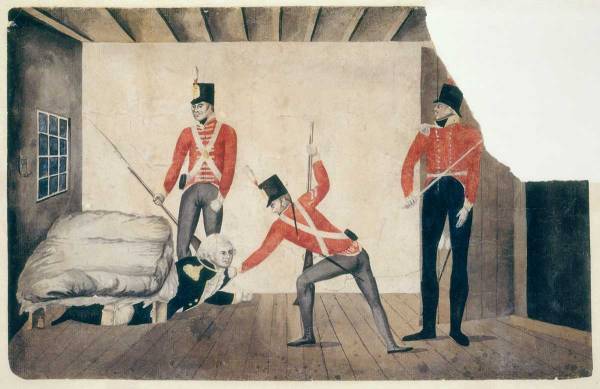
The spark that ignited the Rum Rebellion occurred on the morning of January 26, 1808, when Governor Bligh ordered the arrest of Johnston and several other officers for their involvement in the illegal rum trade. In a swift and audacious move, Johnston, backed by the Rum Corps, responded by seizing control of the government and imprisoning Bligh, effectively usurping his authority.

The rebellion was remarkably bloodless, yet its implications were profound. For the first time in Australian history, a governor had been forcibly removed from office by military force, setting a dangerous precedent for the rule of law and civil governance in the colony. Despite Bligh’s eventual release and the dispatch of a new governor, the legacy of the rebellion would cast a long shadow over Australian politics.

In the aftermath of the Rum Rebellion, the British government launched an inquiry into the events surrounding Bligh’s deposition. While Johnston and other key figures were eventually recalled to England to face charges, the broader ramifications of the rebellion reverberated throughout the colony.

The episode exposed the fragility of colonial governance and highlighted the need for stronger mechanisms of accountability and oversight. It also galvanized calls for greater democratic reforms and increased civilian control over military affairs. Over time, the principles of responsible government and representative democracy would take root, shaping the future trajectory of Australian politics.

The Rum Rebellion stands as a pivotal moment in Australia’s history, symbolizing the struggle for governance and freedom in the early years of the colony. It serves as a reminder of the enduring values of democracy, accountability, and the rule of law, which continue to underpin the Australian nation today. By understanding the causes and consequences of the rebellion, we gain insight into the complex dynamics that shaped the evolution of Australian society and politics, laying the foundation for the vibrant democracy that exists today.

Blog at WordPress.com.

Up ↑