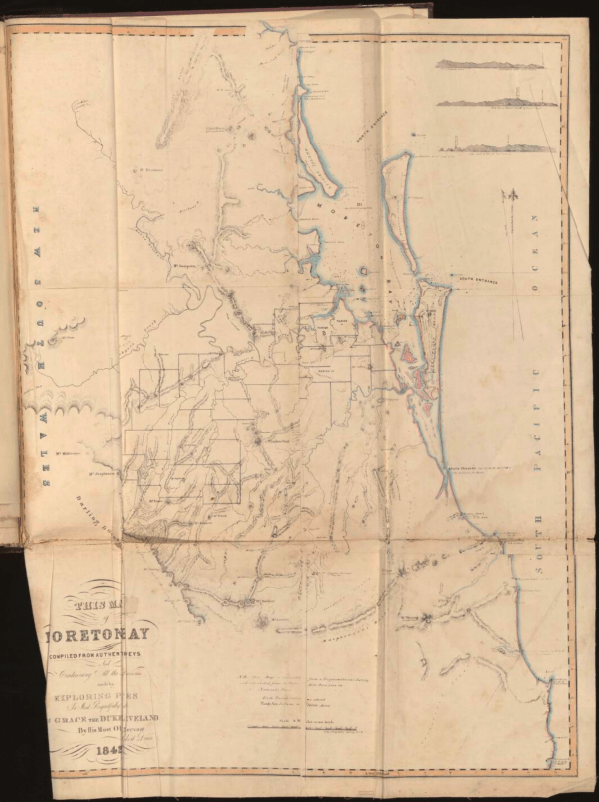
Unveiling the Foundation: Brisbane – Moreton Bay Penal Settlement of 1825

In the annals of Australian history, there exists a significant chapter that marks the foundation of Brisbane, the capital city of Queensland. This chapter, etched in the year 1825, witnessed the establishment of the Moreton Bay convict settlement, a pivotal moment that shaped the trajectory of both the region and the nation as a whole. Delving into the depths of this historical event unveils not only the origins of one of Australia’s most vibrant cities but also sheds light on the complexities of colonialism, penal practices, and the enduring resilience of the human spirit.

The establishment of the Moreton Bay Penal Settlement was born out of a need for expanding British colonial influence in the Australian continent. At the time, the British government faced a conundrum concerning the management of convicts, exacerbated by overcrowding in existing settlements such as Sydney. Thus, the decision was made to establish a new outpost in the vast expanse of what is now known as Queensland.

On September 2, 1824, under the command of Captain Henry Miller, the brig Amity arrived at Redcliffe, marking the first official European settlement in the area. However, it was not until the following year, on September 13, 1825, that Lieutenant Henry Miller, along with a small contingent of soldiers, officially founded the Moreton Bay convict settlement on the banks of the Brisbane River. This event laid the groundwork for what would eventually evolve into the bustling metropolis of Brisbane.

The significance of the Moreton Bay Penal Settlement in Australian history cannot be overstated. Firstly, it served as a crucial cog in the British colonial machine, extending their dominion over vast swathes of land previously inhabited by Indigenous peoples for millennia. The establishment of such settlements not only facilitated the exploitation of natural resources but also laid the groundwork for the imposition of European societal norms and structures upon the indigenous populations.

Moreover, the Moreton Bay settlement played a pivotal role in the broader context of the convict system in Australia. As a penal colony, it served as a place of punishment and rehabilitation for convicts transported from Britain and Ireland. The harsh conditions endured by these individuals, coupled with the forced labor they were subjected to, left an indelible mark on the collective psyche of the nation. Yet, despite the hardships they faced, many convicts exhibited remarkable resilience, contributing to the development of the fledgling colony through their labor and ingenuity.

Furthermore, the establishment of the Moreton Bay Penal Settlement laid the foundation for the future development of Brisbane as a thriving urban center. Over the years, the settlement evolved into a bustling hub of commerce, culture, and innovation, attracting settlers from far and wide. The legacy of those early pioneers, both convict and free, is evident in the rich tapestry of heritage that permeates the city to this day.

However, it is crucial to acknowledge the darker aspects of this history, including the displacement and mistreatment of Indigenous peoples, whose land was forcibly colonized and whose culture was marginalized in the process. The story of Brisbane’s founding is not solely one of triumph and progress but also one of struggle and resilience in the face of adversity.

In conclusion, the founding of the Moreton Bay Penal Settlement in 1825 stands as a seminal moment in Australian history, marking the birth of one of the nation’s most iconic cities. Its significance lies not only in its role as a colonial outpost but also in its contribution to the broader narrative of convictism and nation-building in Australia. As we reflect on this historical milestone, it is imperative that we strive to understand the complexities of our past and honor the diverse voices that have shaped the course of our shared history.


Unearthing Australia’s Riches: The Legacy of Broken Hill’s Silver, Lead, and Zinc Mines

In the rugged outback of New South Wales, amidst the dusty plains and the relentless Australian sun, lies a place of immense historical significance: Broken Hill. This remote town, nestled in the heart of the Australian bush, holds within its soil a treasure trove of silver, lead, and zinc. Its story is not just one of mineral wealth but of resilience, innovation, and the shaping of a nation’s destiny.

The year was 1885 when the Broken Hill Proprietary Company Limited (BHP) began its mining operations in this desolate yet resource-rich landscape. With an initial output of 1,1885 bhp (break horsepower), the mines quickly became a beacon of industrial progress in Australia. The discovery of vast deposits of silver, lead, and zinc transformed Broken Hill into one of the world’s largest mining hubs, attracting a wave of fortune seekers and laborers from far and wide.

The significance of Broken Hill in Australian history cannot be overstated. At a time when the nation was still in its infancy, the wealth generated by the mines played a pivotal role in driving economic growth and development. It fueled the expansion of infrastructure, the establishment of towns and cities, and the emergence of a thriving industrial sector. Moreover, the influx of migrants, drawn by the promise of prosperity, contributed to the cultural diversity and dynamism that define modern Australia.

But the legacy of Broken Hill extends far beyond its historical roots. Despite facing numerous challenges over the decades, including fluctuating commodity prices, environmental concerns, and shifts in global markets, the mines continue to play a vital role in Australia’s economy.

Today, Broken Hill remains a cornerstone of the country’s mining industry, producing a significant portion of Australia’s silver, lead, and zinc. The minerals extracted from its depths are essential components in various sectors, from manufacturing and construction to renewable energy and technology. Moreover, they contribute billions of dollars to the national economy and support thousands of jobs across the country.

Yet, the significance of Broken Hill goes beyond its economic contributions. It stands as a testament to the ingenuity and resilience of the Australian people. Despite the harshness of the environment and the challenges of extracting resources from deep underground, the men and women who work in the mines continue to demonstrate their dedication and skill, ensuring that Broken Hill remains a vital cog in the nation’s industrial machinery.

Photo by Tom Fisk on Pexels.com

Furthermore, the mining industry in Broken Hill has embraced technological innovation and sustainability practices, striving to minimize its environmental footprint and maximize efficiency. From advanced drilling techniques to state-of-the-art processing facilities, these efforts not only ensure the long-term viability of the mines but also reinforce Australia’s commitment to responsible resource development.

In conclusion, the story of Broken Hill’s silver, lead, and zinc mines is a quintessential chapter in the narrative of Australia’s history and economic development. From humble beginnings in 1885 to the present day, these mines have endured challenges and setbacks, yet they remain a symbol of resilience, innovation, and the enduring spirit of the Australian people. As long as the minerals continue to flow from its depths, Broken Hill will remain a shining example of the nation’s rich natural resources and the boundless potential they hold for future generations.

The Watershed Moment of the Australian Dollar

On December 12, 1983, Australia made a bold move that would reverberate through its economic history: the floating of the Australian dollar. This decision marked a significant departure from the fixed exchange rate regime, ushering in an era of flexibility and autonomy in Australia’s monetary policy. In this blog post, we delve into the importance of this event in Australian history and explore how the Australian dollar has evolved since then.

The Importance of Dec 12, 1983

Prior to December 1983, the Australian dollar was pegged to a basket of currencies, predominantly the British pound and later the US dollar. This fixed exchange rate regime restricted the ability of policymakers to respond effectively to economic fluctuations and external shocks. By floating the dollar, the Australian government allowed market forces to determine its value, enabling adjustments in response to changing economic conditions.

This move was not without controversy. Skeptics feared volatility and instability in the currency markets. However, the benefits soon became apparent. The floating of the Australian dollar provided greater flexibility for the Reserve Bank of Australia (RBA) to conduct monetary policy, fostering economic stability and growth.

Impact on Australian Economy

The floating of the Australian dollar had profound implications for various sectors of the economy. One of the immediate effects was an increase in the competitiveness of Australian exports. With a flexible exchange rate, exporters could better withstand fluctuations in global demand and currency values, enhancing the resilience of the Australian economy to external shocks.

Moreover, the floating of the dollar facilitated the integration of Australia into the global economy. It encouraged foreign investment and trade, leading to increased capital flows and economic growth. As the Australian dollar became more responsive to market forces, investors gained confidence in the stability of the currency, further bolstering economic activity.

Photo by David Peterson on Pexels.com

Evolution of the Australian Dollar

Since its floatation in 1983, the Australian dollar has experienced fluctuations driven by a myriad of factors, including changes in global economic conditions, commodity prices, and domestic policy settings. During periods of economic expansion, the Australian dollar often strengthened, buoyed by robust demand for Australian exports, particularly commodities such as iron ore and coal.

Conversely, during economic downturns or periods of heightened uncertainty, the Australian dollar typically weakened as investors sought safer assets. For instance, during the global financial crisis of 2008, the Australian dollar depreciated significantly as investors flocked to the safety of the US dollar and other haven currencies.

In recent years, the Australian dollar has also been influenced by shifts in geopolitical dynamics, such as trade tensions between the United States and China, and the COVID-19 pandemic, which disrupted global supply chains and dampened economic activity worldwide.

Looking Ahead

As Australia navigates the complexities of the 21st-century global economy, the floating of the Australian dollar remains a cornerstone of its economic policy framework. While challenges and uncertainties persist, including the ongoing impacts of climate change and technological disruption, the flexibility afforded by a floating exchange rate provides a solid foundation for adapting to changing circumstances.

Furthermore, with advancements in financial technology and increasing interconnectedness of global markets, the Australian dollar is likely to continue evolving, adapting to emerging trends and developments in the international financial system.

Conclusion

Dec 12, 1983, marked a pivotal moment in Australian economic history with the floating of the Australian dollar. This decision unleashed a wave of economic reforms, fostering greater flexibility and resilience in the Australian economy. Over the decades, the Australian dollar has weathered numerous challenges, reflecting the dynamism of the global economy.

As Australia looks to the future, the floating exchange rate regime remains a cornerstone of its economic policy framework, enabling the country to navigate an increasingly interconnected and uncertain world. While the path ahead may be fraught with challenges, the lessons learned from the floating of the Australian dollar provide valuable insights for policymakers and economists alike.

The Forgotten Story: South Sea Islanders as Indentured Laborers in 1860s Queensland

There exists a chapter in Australian history often overshadowed by more prominent narratives of colonization and immigration—the story of the South Sea Islanders brought to Queensland as indentured laborers in the 1860s. This forgotten tale holds immense significance, not only for understanding the economic and social dynamics of the time but also for recognizing the enduring impact it had on both the descendants of these Islanders and the broader Australian society.

The 1860s marked a period of significant transformation in Queensland, then a newly established British colony hungry for labor to support its burgeoning agricultural industry, particularly sugarcane cultivation. Facing a shortage of local workers willing to toil in the sweltering Queensland sun, plantation owners turned their eyes to the islands of the South Pacific, where they saw a potential solution in the form of indentured labor.

Under the guise of “blackbirding,” a practice where Islanders were coerced or deceived into signing contracts for plantation work, thousands of men and women from islands such as Vanuatu, the Solomon Islands, and Fiji were brought to Queensland. Promises of wages, food, and accommodation lured many Islanders into what they believed would be a temporary arrangement. However, the reality they encountered upon arrival was vastly different.

Indentured laborers faced harsh conditions on the plantations, enduring long hours of arduous work, inadequate living quarters, and meager pay. Many were subjected to physical and emotional abuse, with little recourse for justice or escape. The system of indenture, while ostensibly offering a means of employment, amounted to little more than legalized exploitation, as Islanders found themselves trapped in a cycle of debt bondage and servitude.

The significance of this chapter in Australian history lies not only in the economic benefits it brought to Queensland’s agricultural industry but also in the profound social and cultural ramifications it had on both the Islanders and Australian society as a whole. The influx of South Sea Islander laborers contributed to the growth of Queensland’s sugarcane industry, which became a cornerstone of the state’s economy. However, this economic prosperity came at a human cost that cannot be overlooked.

The legacy of indentured labor continues to reverberate through generations, as descendants of South Sea Islanders grapple with the complex interplay of identity, heritage, and belonging. For many, the stories of their ancestors’ struggles and resilience serve as a reminder of the resilience and resilience of their people. The South Sea Islander community has long fought for recognition and restitution, seeking acknowledgment of the injustices perpetrated against their forebears and striving to preserve and celebrate their cultural heritage.

In recent years, there has been a growing acknowledgment of the historical injustices faced by South Sea Islanders, with calls for official apologies, reparations, and greater recognition of their contributions to Australian society. Initiatives such as the Queensland Government’s South Sea Islander Recognition Act of 1994 and the establishment of organizations like the Australian South Sea Islander Alliance demonstrate a growing awareness of the need to confront the darker chapters of Australia’s past and work towards reconciliation and justice.

As we reflect on the history of South Sea Islanders in Queensland, it is imperative that we acknowledge the profound impact of their experiences on the fabric of Australian society. Their story serves as a poignant reminder of the complex and often painful legacy of colonization and exploitation, and the ongoing struggle for justice and equality. By honoring their past and amplifying their voices, we can ensure that the contributions and sacrifices of South Sea Islanders are not forgotten, but rather recognized and celebrated as an integral part of Australia’s rich tapestry of diversity and resilience.

The Black Line: A Dark Chapter in Australian History

In the annals of Australian history, there are moments that stand out as stark reminders of the country’s complex past, where the clash of cultures and the pursuit of land and power led to tragic consequences. One such event is the Black Line of 1830, an attempt by the colonial authorities to corral and subjugate the Aboriginal population of the Tasman Peninsula. This dark chapter, though often overlooked, left an indelible mark on the landscape of Australia and its people.

In the early 19th century, as European settlers expanded across the Australian continent, they encountered Indigenous populations who had lived on the land for tens of thousands of years. These encounters were marked by misunderstandings, conflicts, and violence, as each group sought to assert their dominance and secure their interests. By the 1830s, tensions had reached a boiling point in Van Diemen’s Land (present-day Tasmania), as settlers encroached further into Aboriginal territories, disrupting traditional ways of life and leading to resistance from the Indigenous inhabitants.

In response to this resistance and a series of violent clashes between settlers and Aboriginal groups, the colonial government of Tasmania devised a plan known as the Black Line. The goal was to round up and capture all remaining Aboriginal people on the Tasman Peninsula, thereby clearing the surrounding areas for European settlement and reducing the perceived threat to colonial interests. This ambitious and deeply flawed plan involved forming a human chain, or “line,” stretching across the peninsula, with armed settlers and soldiers marching in unison to drive the Aboriginal people towards capture.

The Black Line, which took place in October 1830, was a logistical nightmare from the outset. The terrain of the Tasman Peninsula was rugged and densely forested, making it difficult to maintain a continuous line of searchers. Additionally, the Aboriginal people were well-versed in the land and adept at evading capture, employing their knowledge of the terrain to outmaneuver the encroaching forces. Despite the efforts of the settlers and soldiers, the Black Line ultimately failed to achieve its objective of capturing the remaining Aboriginal population.

While the Black Line may have failed in its immediate goal, its impact on Australian history cannot be understated. The event laid bare the deep-seated racism and colonial attitudes towards the Indigenous peoples of Australia, viewing them as obstacles to be removed rather than as rightful inhabitants of the land. The Black Line also highlighted the inherent brutality of colonial expansion, as armed forces were mobilized to forcibly remove and subjugate Indigenous populations in the pursuit of land and resources.

Furthermore, the failure of the Black Line underscored the resilience and determination of the Aboriginal people in the face of colonial oppression. Despite facing overwhelming odds and the threat of violence, they continued to resist and defend their traditional lands and way of life. The legacy of this resistance lives on in the ongoing struggle for Indigenous rights and recognition in Australia today.

In the decades following the Black Line, the Aboriginal population of Tasmania continued to suffer dispossession, displacement, and violence at the hands of European settlers. Their numbers dwindled, their cultures were suppressed, and their land was taken from them. It was not until much later, through acts of reconciliation and restitution, that steps were taken to acknowledge the injustices of the past and to work towards healing the wounds inflicted upon Australia’s Indigenous peoples.

In conclusion, the Black Line of 1830 stands as a somber reminder of the dark realities of Australia’s colonial history. It serves as a testament to the resilience of the Aboriginal people in the face of adversity and the ongoing struggle for justice and recognition. By confronting the painful truths of the past, we can strive to build a more inclusive and equitable future for all Australians, one that acknowledges and respects the rights and experiences of Indigenous peoples.

Dirk Hartog’s Landing: A Milestone in Australian History

In Australian history, certain moments stand out as pivotal, marking the intersection of cultures, the discovery of new lands, and the forging of connections across vast distances. One such moment occurred in 1616 when Dutch navigator Dirk Hartog landed on an island off the coast of Western Australia, a place that now bears his name. This event not only marked the first recorded European landing on Australian soil but also laid the foundation for centuries of exploration, colonization, and cultural exchange. In this blog post, we delve into the significance of Dirk Hartog’s landing and its enduring impact on Australian history.

Dirk Hartog’s journey to the shores of Western Australia was part of the broader Dutch exploration of the Indian Ocean and the Spice Islands. Sailing aboard the Dutch East India Company ship Eendracht, Hartog charted a course across the vast expanse of the ocean, seeking new trade routes and opportunities for Dutch commerce. Little did he know that his voyage would lead to a momentous encounter with the unknown shores of Australia.

On October 25, 1616, Hartog’s ship made landfall on an uninhabited island off the coast of what is now Shark Bay in Western Australia. This island, which Hartog named after himself, became a landmark in the history of Australian exploration. Upon landing, Hartog erected a wooden post, known as the Hartog Plate, inscribed with details of his visit, including the names of his ship and the date of his arrival. This simple act would become a touchstone for future explorers and a tangible link to Australia’s past.

Dirk Hartog’s landing holds immense significance in the tapestry of Australian history for several reasons. Firstly, it represents the earliest documented European contact with the Australian continent, predating the better-known voyages of explorers like James Cook by over a century. Hartog’s arrival shattered the myth of Terra Australis Incognita, the fabled southern landmass hypothesized by European geographers, and began the process of European exploration and colonization of Australia.

Secondly, Hartog’s landing served as a catalyst for subsequent voyages of discovery and colonization in Australia. The knowledge gained from Hartog’s expedition, including navigational charts and geographical observations, paved the way for future explorers to venture further into the continent’s interior and establish permanent settlements along its coastlines.

Furthermore, Hartog’s landing marked the beginning of European involvement in Australia’s Indigenous history. While Hartog encountered no Indigenous inhabitants during his brief stay, his arrival foreshadowed the profound impact that European colonization would have on the Aboriginal peoples of Australia. The subsequent waves of settlement and the clash of cultures that ensued would shape the course of Australian history for centuries to come.

Despite its historical significance, Dirk Hartog’s landing remained relatively obscure for many years, overshadowed by later events in Australian history. However, in recent decades, efforts have been made to commemorate Hartog’s expedition and its importance to Australia’s heritage.

Photo by Ingo Joseph on Pexels.com

In 2016, Australia celebrated the 400th anniversary of Hartog’s landing with a series of events and commemorations across the country. The Hartog 400 Festival, held in Western Australia, featured exhibitions, reenactments, and cultural exchanges highlighting the significance of Hartog’s voyage. Additionally, the Hartog Plate itself, now housed in the Rijksmuseum in Amsterdam, serves as a tangible reminder of the Dutch contribution to Australia’s history.

Dirk Hartog’s landing on the shores of Western Australia in 1616 was a momentous event that reverberates through the corridors of Australian history. From its role as the first recorded European contact with Australia to its legacy as a symbol of exploration and cultural exchange, Hartog’s expedition continues to resonate with Australians today. As we reflect on the significance of this historic landing, we are reminded of the enduring connections between peoples and the enduring spirit of discovery that defines our shared human experience.

The Birth of University of Sydney

On October 1, 1850, a momentous event took place in the vibrant city of Sydney, Australia – the founding of the University of Sydney. This institution, steeped in history and tradition, has since become a cornerstone of Australian education, culture, and society. As we delve into the significance of this historic date, we uncover not only its impact on the past but also its enduring relevance in contemporary Australia.

The establishment of the University of Sydney marked a pivotal moment in Australia’s colonial history. At the time, the colony of New South Wales was experiencing rapid growth and development, fueled by waves of immigration and burgeoning trade. Recognizing the need for higher education to support this growth, the colonial government took decisive action to establish a university.

The founding of the University of Sydney was more than just the creation of an academic institution; it was a statement of ambition and aspiration for the future of Australia. At a time when educational opportunities were limited, the university opened doors to knowledge and enlightenment for generations to come. It became a symbol of progress and enlightenment in the young colony, laying the groundwork for a more intellectually vibrant society.

Furthermore, the establishment of the University of Sydney reflected the growing confidence and self-determination of the Australian colonies. By creating their own institution of higher learning, the colonists asserted their ability to shape their own destiny and carve out a unique identity within the British Empire.

Over the past 174 years, the University of Sydney has evolved into one of Australia’s leading educational and research institutions. Its alumni include some of the country’s most prominent leaders, scholars, and innovators, contributing to every facet of Australian society.

In the contemporary context, the University of Sydney remains a vital hub of academic excellence and innovation. Its research endeavors span a wide range of disciplines, from medicine and engineering to the humanities and social sciences, driving forward knowledge and innovation in Australia and beyond.

Moreover, the university plays a crucial role in fostering a diverse and inclusive society. Through its commitment to access and equity, it provides opportunities for students from all backgrounds to pursue higher education and realize their full potential. This commitment to diversity enriches not only the university community but also the broader Australian society.

Photo by Line Knipst on Pexels.com

Furthermore, the University of Sydney continues to be a beacon of cultural and intellectual life in Sydney. Its campus, nestled in the heart of the city, serves as a vibrant hub of activity, hosting events, exhibitions, and public lectures that enrich the cultural fabric of the city.

As we reflect on the significance of October 1, 1850, and the founding of the University of Sydney, we recognize its enduring legacy in Australian history and society. From its humble beginnings as a colonial institution to its current status as a world-renowned center of learning and innovation, the university stands as a testament to the power of education to transform lives and shape the future. As we look ahead, we can be confident that the University of Sydney will continue to play a central role in shaping the destiny of Australia for generations to come.

Unveiling History: The Inauguration of Australia’s First Steam Railway Line in 1854

In Australian history, the year 1854 stands out as a pivotal moment, marked by the inauguration of the nation’s first steam railway line in Melbourne. This landmark event not only revolutionized transportation but also heralded a new era of industrialization and connectivity for the burgeoning nation. In this blog post, we delve into the significance of this momentous occasion and explore its lasting impact on Australian society.

The Birth of a New Era: The unveiling of Australia’s first steam railway line in 1854 represented more than just the introduction of a new mode of transportation; it symbolized progress and modernization. Prior to the advent of railways, travel in Australia was arduous and time-consuming, primarily reliant on horse-drawn carts and ships. The introduction of steam locomotives revolutionized the way people traveled and transported goods, significantly reducing travel times and facilitating trade and commerce.

Bridging Distances: One of the most significant aspects of the Melbourne steam railway line was its ability to bridge vast distances, connecting previously isolated communities and regions. This newfound connectivity fostered economic growth and development, as goods and passengers could now traverse the landscape with greater ease and efficiency. The railway line acted as a catalyst for urbanization, spurring the growth of towns and cities along its route and transforming the social and economic fabric of the nation.

A Catalyst for Growth: The opening of the steam railway line in Melbourne sparked a wave of infrastructure development across Australia. Recognizing the potential economic benefits of railway networks, governments and private investors embarked on ambitious railway construction projects, crisscrossing the continent with tracks and stations. These railways not only facilitated the transportation of goods and people but also served as arteries of progress, facilitating the expansion of agriculture, mining, and industry.

Transforming Society: The impact of the steam railway line extended beyond the realm of economics, profoundly shaping Australian society. Rail travel became more accessible to people from all walks of life, facilitating migration and mobility. The railway also played a crucial role in forging a sense of national identity, as Australians from diverse backgrounds found themselves linked by the iron rails that stretched across the landscape. Moreover, the railway brought about cultural exchange, as people and ideas flowed freely along its tracks, enriching the tapestry of Australian society.

Legacy and Continuity: The legacy of Australia’s first steam railway line endures to this day, serving as a testament to the ingenuity and vision of those who conceived and built it. The railway laid the foundation for the modern transportation network that spans the continent, enabling Australians to traverse vast distances with relative ease. Moreover, it remains a symbol of progress and innovation, reminding us of the transformative power of infrastructure and the enduring legacy of those who dare to dream big.

    The inauguration of Australia’s first steam railway line in 1854 was a watershed moment in the nation’s history, heralding a new era of connectivity, growth, and transformation. As we reflect on this historic milestone, we are reminded of the power of human ingenuity to reshape the world around us and the enduring legacy of those who pave the way for progress. The steam railway line in Melbourne stands as a testament to Australia’s journey from colonial outpost to modern nation, a journey fueled by the iron wheels of progress and propelled by the spirit of innovation.

    Edwin Flack: Pioneering Australia’s Olympic Spirit in 1896

    In Australian sporting history, one name stands out as the trailblazer who ignited the nation’s passion for Olympic excellence. Edwin Flack, a remarkable athlete from the late 19th century, etched his name in the annals of time as Australia’s first Olympian. His journey to the inaugural modern Olympic Games in 1896 not only marked a personal triumph but also heralded the beginning of Australia’s storied Olympic legacy.

    Early Life and Athletic Prowess: Born on November 5, 1873, in London, England, Edwin Harold Flack moved to Australia at the tender age of five. Growing up in Victoria, he demonstrated an early affinity for sports, excelling in both athletics and tennis. Flack’s athletic prowess soon caught the attention of his peers and mentors, setting the stage for his meteoric rise in the sporting arena.

    Sporting Achievements: Flack’s name became synonymous with excellence in multiple disciplines, but it was his prowess in athletics that truly set him apart. In 1890, he claimed the Victorian one-mile championship, laying the foundation for a string of victories that would solidify his status as a sporting icon. His versatility shone through as he dominated events ranging from sprints to distance running.

    The year 1896 marked a watershed moment in Flack’s career as he embarked on a journey that would forever alter the course of Australian sporting history. With unwavering determination and unparalleled skill, he set sail for Athens, Greece, to compete in the inaugural modern Olympic Games.

    Historic Triumph at the 1896 Olympics: Edwin Flack’s participation in the 1896 Olympics was more than just a personal quest for glory; it was a testament to his unwavering commitment to excellence and his pioneering spirit. Competing in the 800 meters and 1500 meters events, Flack captivated audiences with his electrifying performances.

    In a display of sheer dominance, Flack clinched the gold medal in both the 800 meters and 1500 meters races, etching his name in the annals of Olympic history as Australia’s first-ever Olympic champion. His triumphs reverberated across the globe, capturing the imagination of a nation and inspiring future generations of Australian athletes to strive for greatness on the world stage.

    Photo by Pixabay on Pexels.com

    Significance in Australian History: Beyond his individual accomplishments, Edwin Flack’s legacy extends far beyond the realm of athletics. His historic triumphs at the 1896 Olympics served as a catalyst for the burgeoning sports culture in Australia, igniting a flame of national pride and unity that continues to burn brightly to this day.

    Flack’s pioneering spirit embodied the essence of the Olympic movement, transcending borders and uniting nations in the pursuit of sporting excellence. His indomitable spirit and unwavering dedication to his craft serve as an enduring source of inspiration for athletes around the world, reminding us all of the power of perseverance and the limitless potential of the human spirit.

    In the annals of Australian sporting history, few figures loom as large as Edwin Flack. His historic triumphs at the 1896 Olympics not only cemented his legacy as Australia’s first Olympian but also laid the foundation for a proud tradition of excellence that continues to thrive to this day. As we celebrate his achievements and honor his memory, let us draw inspiration from his remarkable journey and strive to emulate his unwavering commitment to greatness in all endeavors. Edwin Flack may have been Australia’s first Olympian, but his legacy will endure as a shining beacon of hope and inspiration for generations to come.

    The Land Down Under’s Leap Forward: The Significance of Australia’s Sex Discrimination Act of 1984

    In the realm of history, certain dates mark significant milestones, igniting change and shaping the course of a nation. August 1, 1984, stands as one such pivotal moment in Australian history. On this day, the Australian Parliament passed the Sex Discrimination Act, a legislative landmark that echoed a resounding call for equality and laid the foundation for a more inclusive society. Let’s delve into the significance of this transformative piece of legislation and its enduring impact on Australian society.

    Prior to the enactment of the Sex Discrimination Act, Australia, like many nations, grappled with systemic inequalities entrenched in its social fabric. Discrimination based on sex permeated various facets of life, from employment opportunities to access to education and services. Women, in particular, faced formidable barriers in their quest for equality, battling entrenched biases and institutionalized sexism.

    By passing the Sex Discrimination Act, Australia took a bold stride towards dismantling these barriers. The legislation prohibited discrimination on the basis of sex, marital status, or pregnancy, heralding a new era of equal rights and opportunities for all Australians. It was a watershed moment that signaled the nation’s commitment to fostering a more just and inclusive society.

    One of the most significant outcomes of the Sex Discrimination Act was its empowerment of women. By outlawing discriminatory practices in the workplace and beyond, the legislation paved the way for greater participation of women in the workforce and public life. No longer could women be unfairly denied employment or promotion opportunities simply because of their gender.

    Moreover, the Act provided a legal framework for addressing gender-based harassment and ensuring safer working environments for women. It affirmed the principle of equal pay for equal work, challenging the prevailing gender wage gap and advocating for economic justice. In doing so, it empowered women to assert their rights and demand fair treatment in all spheres of life.

    Beyond its legal ramifications, the Sex Discrimination Act sparked a cultural shift in Australia, challenging traditional gender norms and fostering a more inclusive society. It challenged the entrenched beliefs that relegated women to subordinate roles and constrained their aspirations. Instead, it championed the idea that every individual, regardless of gender, deserves dignity, respect, and equal opportunities.

    The Act not only empowered women but also encouraged men to question and challenge outdated notions of masculinity that perpetuated harmful stereotypes and restricted personal freedom. It laid the groundwork for more nuanced conversations about gender equality and diversity, encouraging Australians to embrace the richness of their differences and celebrate the contributions of all members of society.

    As we reflect on the legacy of the Sex Discrimination Act, it is evident that its impact reverberates through the annals of Australian history. It has paved the way for subsequent legislation aimed at combating discrimination and promoting diversity, including the Disability Discrimination Act and the Racial Discrimination Act. Its principles continue to inform policymaking and advocacy efforts aimed at fostering a more inclusive society.

    However, despite the progress made, challenges persist on the road to gender equality. Disparities in pay and representation persist, and women continue to face barriers in male-dominated industries and leadership roles. Moreover, intersectional issues, such as race, class, and sexuality, compound the challenges faced by marginalized groups, underscoring the need for ongoing vigilance and action.

    In commemorating the passage of the Sex Discrimination Act on August 1, 1984, we celebrate not only a legislative triumph but also a testament to the resilience and determination of those who fought for equality. It serves as a reminder of the progress we have made and the work that remains to be done in building a more just, equitable, and inclusive Australia. As we look to the future, let us draw inspiration from the spirit of unity and solidarity that propelled the enactment of this landmark legislation, and continue to strive towards a society where every individual is valued and empowered, regardless of gender.

    Blog at WordPress.com.

    Up ↑