Unveiling Australia’s First Stock Exchange: A Beacon of Economic Evolution

As we look back into Australia’s economic history, milestones are etched that mark the transformation of nations and economies. One such pivotal moment occurred in 1859 when Australia inaugurated its first stock exchange, a development that not only laid the foundation for the country’s financial infrastructure but also catalyzed a trajectory towards modern economic prowess. As we delve into the significance of this event and its enduring relevance in the global trading landscape, we uncover a tale of innovation, resilience, and interconnected markets.

The establishment of Australia’s first stock exchange in 1859, known as the Sydney Stock Exchange (SSE), represented a watershed moment in the nation’s economic journey. With the discovery of gold in Australia sparking a rush of prosperity, the need for a formalized market to facilitate investment and capital formation became increasingly apparent. Thus, the SSE emerged as a platform where investors could buy and sell shares of companies, fostering liquidity and enabling the mobilization of capital for ventures ranging from mining to infrastructure development.

At its core, the inception of the SSE symbolized Australia’s integration into the global economy. As the exchange gained momentum, it attracted foreign investment, facilitating cross-border capital flows and fostering economic ties with international markets. This newfound connectivity not only bolstered Australia’s economic standing but also positioned it as a player in the broader global trading ecosystem.

Photo by Pixabay on Pexels.com

Fast forward to the present day, and the legacy of Australia’s first stock exchange reverberates through the corridors of modern finance. The SSE, now known as the Australian Securities Exchange (ASX), stands as a cornerstone of Australia’s financial infrastructure, facilitating the trading of a diverse array of securities, including stocks, bonds, derivatives, and exchange-traded funds. Its robust regulatory framework, transparent trading practices, and technological advancements have positioned it as one of the world’s leading exchanges, attracting investors from far and wide.

Moreover, the ASX serves as a barometer of Australia’s economic health, providing insights into market sentiment, investor confidence, and business sentiment. As such, it plays a pivotal role in shaping economic policy, guiding investment decisions, and fostering economic stability. The ASX 200, an index comprising the largest 200 companies listed on the exchange, is often used as a benchmark to gauge the performance of the Australian stock market and, by extension, the broader economy.

Beyond its domestic significance, the ASX occupies a prominent position in the global trading ecosystem. With advancements in technology and the proliferation of electronic trading platforms, the exchange has transcended geographical boundaries, attracting investors and issuers from around the world. Its role as a gateway to the Asia-Pacific region has become increasingly pronounced, offering access to a burgeoning market of investors and opportunities.

Furthermore, the ASX has embraced innovation and adaptation in response to evolving market dynamics. From the introduction of electronic trading systems to the adoption of blockchain technology for settlement, the exchange has continually evolved to meet the needs of market participants and enhance efficiency, transparency, and accessibility.

In an era characterized by interconnectedness and interdependence, the significance of Australia’s first stock exchange extends beyond national borders. As a vital node in the global trading network, the ASX embodies the spirit of economic collaboration and cooperation, serving as a conduit for capital, ideas, and opportunities to flow seamlessly across borders.

In conclusion, the establishment of Australia’s first stock exchange in 1859 marked a seminal moment in the nation’s economic evolution, paving the way for its integration into the global trading ecosystem. From its humble origins as the Sydney Stock Exchange to its current incarnation as the Australian Securities Exchange, its journey reflects the resilience, innovation, and adaptability that define modern finance. As we navigate an increasingly complex and interconnected world, the ASX remains a beacon of stability, transparency, and opportunity, shaping the trajectory of Australia’s economy and leaving an indelible mark on the global trading landscape.


Unearthing Riches: The NSW and Victoria Gold Rushes of 1851

In the annals of Australian history, few events have left as indelible a mark as the gold rushes of the mid-19th century. Beginning in 1851, these frenzied quests for riches transformed the colonies of New South Wales (NSW) and Victoria, reshaping their landscapes, societies, and economies. Let’s delve into the significance of these gold rushes and their enduring impact on Australian history.

The NSW Gold Rush:

While NSW was not the epicenter of the gold rush phenomenon, it played a crucial role in sparking the frenzy. In February 1851, Edward Hargraves discovered gold near Bathurst, igniting excitement and triggering a rush of prospectors to the region. This discovery marked the beginning of Australia’s first gold rush.

The significance of the NSW gold rush lay not only in the precious metal unearthed but also in its role as a catalyst for the broader Australian gold rushes. Hargraves’ find demonstrated that Australia held vast untapped reserves of gold, inspiring prospectors to venture further afield in search of fortune.

The Victorian Gold Rush:

However, it was Victoria that would become the epicenter of the gold rush phenomenon, surpassing NSW in both scale and significance. In July 1851, gold was discovered in the streams near Clunes, sparking a rush that would transform the remote colony into a thriving hub of activity.

Victoria’s gold rush was characterized by its sheer magnitude. The discovery of rich gold deposits in Ballarat, Bendigo, and other areas drew fortune-seekers from across the globe, swelling the colony’s population and propelling it into economic prominence. The influx of migrants, including many from China, brought cultural diversity and contributed to the shaping of modern Australian society.

GABENSIS, NEW GUINEA, 1944-03-02. NG2464 WARRANT OFFICER II, HENRY J. O’KENE, AUSTRALIAN NEW GUINEA ADMINISTRATIVE UNIT REPRESENTATIVE AT GABENSIS, (1), A FORMER MINER IN THE GOLD RUSH 

Significance in Australian History:

The gold rushes of NSW and Victoria were pivotal moments in Australian history, leaving a profound and lasting impact on the nation. Here’s why they are considered significant:

  1. Economic Transformation: The gold rushes propelled Australia from a remote colonial outpost to a prosperous nation almost overnight. The influx of gold brought immense wealth, driving economic growth, infrastructure development, and urbanization.
  2. Population Growth and Diversity: The gold rushes triggered unprecedented population growth as people from all walks of life flocked to the goldfields in search of fortune. This influx of migrants, including Europeans, Americans, and Chinese immigrants, contributed to the cultural diversity that defines modern Australia.
  3. Political and Social Change: The gold rushes brought about significant political and social changes. The newfound wealth and population growth led to demands for greater autonomy and representation, ultimately paving the way for the democratization of the colonies and the eventual formation of the Australian nation.
  4. Environmental Impact: The gold rushes had profound environmental consequences, with widespread deforestation, erosion, and pollution resulting from mining activities. These environmental legacies continue to be felt today, underscoring the importance of sustainable resource management.

In conclusion, the gold rushes of NSW and Victoria were watershed moments in Australian history, shaping the nation’s identity, economy, and society in profound ways. Their legacy endures as a testament to the pioneering spirit and resilience of those who sought their fortunes in the rugged landscapes of the Australian colonies.

Watch this fantastic video from the national museum of Australia to learn more!

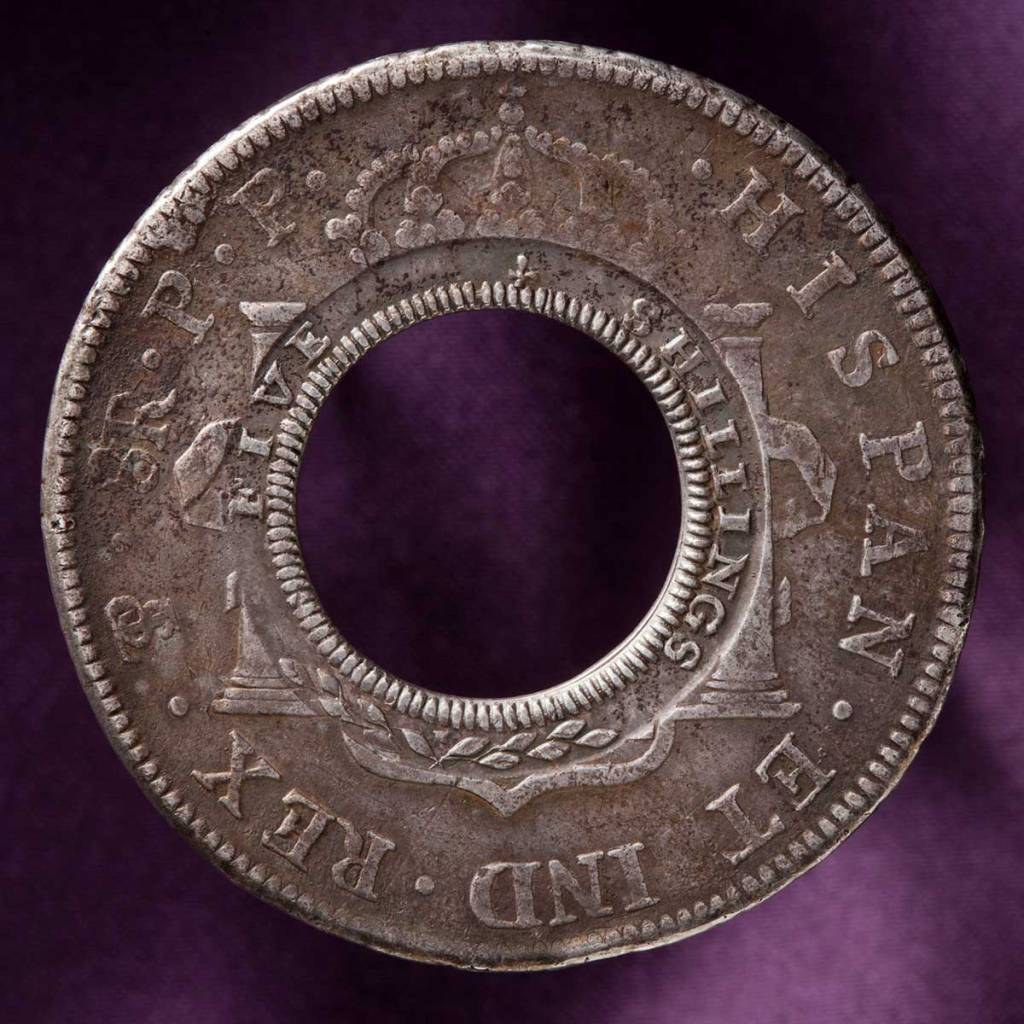
Australia’s First Coin: The Holey Dollar

In the history pages of currency, there are few tales as captivating as that of Australia’s first coin – the Holey Dollar. Dating back to the year 1814, this unique piece of currency holds within its perforated edges a story of colonial innovation, economic necessity, and the enduring spirit of adaptation.

The Colonial Conundrum

In the early 19th century, the British colony of New South Wales faced a pressing issue: a severe shortage of currency. With a growing population and thriving trade, the colony sorely lacked sufficient coinage to facilitate daily transactions. This scarcity led to a reliance on bartering and the use of diverse currencies, ranging from Spanish dollars to rum and even promissory notes.

Governor Lachlan Macquarie’s Solution

Governor Lachlan Macquarie, the visionary leader of New South Wales at the time, recognized the urgency of the situation. To address the currency shortage, he devised a bold plan – the transformation of Spanish silver dollars into two distinct coins: the Holey Dollar and the Dump.

The Birth of the Holey Dollar

The process began with the acquisition of Spanish dollars, which were then stamped with a circular hole in the center, effectively creating two coins – the larger outer ring, known as the Holey Dollar, and the smaller inner disc, referred to as the Dump. These coins were then counterstamped with the colony’s name, value, and year of issue.

Symbolism and Significance

The creation of the Holey Dollar symbolized more than just a pragmatic solution to a currency shortage; it represented the ingenuity and adaptability of the early settlers in Australia. By repurposing existing resources, Governor Macquarie effectively addressed a pressing economic need and laid the foundation for a more stable monetary system in the colony.

Legacy and Collectibility

Today, the Holey Dollar stands as a cherished relic of Australia’s colonial past. With its distinctive design and rich historical significance, it has become a prized collectible among numismatists and historians alike. The scarcity of these coins, coupled with their unique origin story, has contributed to their enduring allure and value.

Conclusion

The induction of Australia’s first coin, the Holey Dollar, in 1814, marked a pivotal moment in the nation’s economic history. Born out of necessity and innovation, this distinctive currency symbolizes the resilience and resourcefulness of early colonial settlers. As we reflect on its legacy, we are reminded of the enduring impact of ingenuity in the face of adversity and the power of creative solutions to shape the course of history.

Blog at WordPress.com.

Up ↑