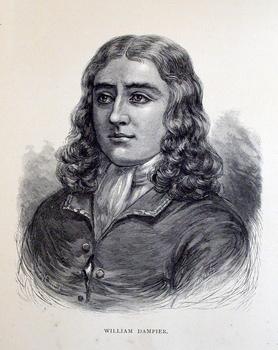
William Dampier: Pioneering the Exploration of Australia’s Coastline in 1699

In Australia’s history of exploration, certain names stand out for their pioneering spirit and contributions to the expansion of human knowledge. Among these, William Dampier holds a significant place, particularly in the context of Australia’s history. In the year 1699, Dampier became the first Englishman to explore parts of the Australian coastline, leaving an indelible mark on the continent’s historical narrative.

The Adventurous Spirit of William Dampier: William Dampier was no stranger to the call of adventure. Born in England in 1651, he spent much of his life at sea, embarking on numerous voyages that took him to far-flung corners of the globe. Dampier was not just a sailor; he was also a skilled navigator, naturalist, and writer. His insatiable curiosity drove him to explore new territories and document his observations meticulously.

The Voyage of 1699: In 1699, Dampier set sail on the HMS Roebuck, commissioned by the British Admiralty for a privateering mission in the Pacific. While the primary objective of the voyage was to harass Spanish shipping and establish British presence in the region, Dampier seized the opportunity to explore the largely uncharted coastline of Australia. His journey took him along the northwest coast of the continent, where he made significant observations and discoveries.

Mapping the Unknown: Dampier’s meticulous approach to exploration meant that he kept detailed records of his observations. His journals and maps provided invaluable insights into the geography, flora, and fauna of the Australian coastline. Despite the challenges of navigating treacherous waters and encountering hostile Indigenous communities, Dampier persevered, leaving behind a legacy of exploration that would inspire future generations of adventurers.

Photo by Pixabay on Pexels.com

Significance in Australian History: Dampier’s exploration of the Australian coastline in 1699 marked a significant milestone in the history of the continent. His observations paved the way for further exploration and eventual colonization by the British. The knowledge gained from Dampier’s voyages contributed to a better understanding of Australia’s geography and natural resources, laying the groundwork for future scientific expeditions and settlement.

Legacy and Impact: Although Dampier’s contributions to Australian exploration are often overshadowed by later explorers such as James Cook, his legacy remains enduring. His writings inspired generations of explorers and naturalists, shaping the way we perceive and understand the Australian landscape. Dampier’s name lives on in geographical features such as Dampier Strait and Dampier Peninsula, serving as a testament to his pioneering spirit and enduring legacy.

    In the annals of Australian history, William Dampier’s exploration of the coastline in 1699 stands as a testament to the human spirit of adventure and discovery. His courage, curiosity, and determination paved the way for future explorers and settlers, leaving an indelible mark on the continent’s historical narrative. Today, we remember Dampier not just as an intrepid sailor, but as a pioneering explorer whose contributions continue to inspire and captivate us.

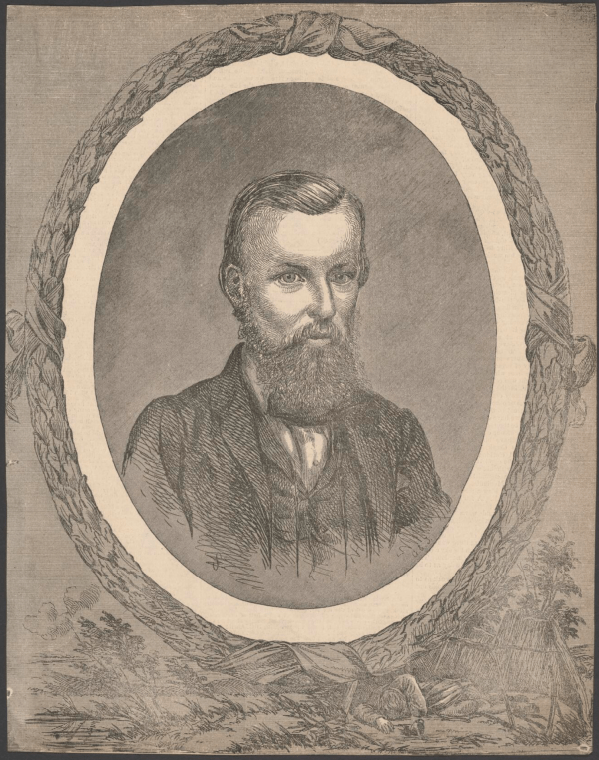
    Mathew Flinders and the Circumnavigation of Australia: A Landmark Expedition in Australian History

    In the history pages of Australian exploration, few names stand as tall as that of Mathew Flinders. His circumnavigation of the continent in 1803, during which he bestowed the name “Australia” upon the landmass, marked a pivotal moment not only in geographical discovery but also in shaping the identity of a nation. In this blog post, we’ll delve into the significance of Flinders’ expedition and its lasting impact on Australian history.

    The Early Days of Exploration: To understand the significance of Flinders’ journey, we must first contextualize it within the broader history of exploration in Australia. Even before Flinders’ time, European navigators such as Abel Tasman and James Cook had charted parts of the continent’s coastline. However, the interior remained largely unexplored and unknown.

    Flinders’ Expedition: In 1801, Mathew Flinders set sail aboard the HMS Investigator, tasked with surveying the coastline of Terra Australis Incognita, as Australia was then known. Over the course of his voyage, Flinders meticulously charted vast stretches of the coast, filling in crucial gaps in European knowledge of the continent.

    Circumnavigation and the Naming of Australia: It was during this voyage that Flinders achieved his most significant feat: the circumnavigation of Australia. Sailing around the entire coastline, he became the first person to conclusively prove that Australia was indeed a single landmass. Moreover, Flinders chose to name the continent “Australia,” a term derived from the Latin word “australis,” meaning southern. This decision not only provided a unifying name for the disparate regions of the continent but also cemented Australia’s place on the world map.

    Scientific Contributions: Beyond his achievements in exploration, Flinders’ expedition had profound scientific implications. His meticulous mapping and observations of the coastline laid the groundwork for future scientific endeavors, including botanical and geological studies. Flinders’ documentation of Australia’s flora and fauna helped to shape early understandings of its biodiversity and ecology.

    Legacy and Significance: The significance of Flinders’ circumnavigation extends far beyond the realm of exploration. His expedition played a crucial role in shaping Australia’s national identity and sense of place in the world. By bestowing the name “Australia” upon the continent, Flinders contributed to the emergence of a distinct Australian identity, separate from its European colonial origins.

    Moreover, Flinders’ exploration paved the way for subsequent waves of colonization and settlement, fundamentally altering the course of Australian history. His maps and charts provided vital information for future navigators, traders, and settlers, facilitating the expansion of European influence across the continent.

    Conclusion: In the pantheon of Australian explorers, Mathew Flinders occupies a central place. His circumnavigation of Australia in 1803, culminating in the naming of the continent, represents a watershed moment in the history of exploration and nation-building. Flinders’ expedition not only expanded European knowledge of Australia but also played a pivotal role in shaping its identity and destiny. Today, his legacy endures as a testament to the spirit of exploration and discovery that continues to define Australia’s national character.

    The Enigma of Ludwig Leichhardt’s Third Expedition: A Vanishing Act in Australian History

    Throughout the history of Australian exploration, few tales are as captivating and mysterious as that of Ludwig Leichhardt’s third expedition. Embarking in 1848, this journey was intended to unlock the secrets of Australia’s interior, yet it ended in perplexing disappearance, leaving behind a legacy shrouded in uncertainty. In this blog post, we delve into the goals of Leichhardt’s ill-fated expedition and explore its enduring significance in the tapestry of Australian history.

    The Goals of the Expedition: Ludwig Leichhardt, a German naturalist and explorer, was no stranger to the challenges of the Australian wilderness. His first two expeditions had already established him as a prominent figure in the exploration of the continent. However, it was his third expedition that aimed to push the boundaries of knowledge even further. The primary goals of this ambitious venture included:

    1. Cross-Continental Journey: One of the central objectives of the expedition was to traverse the Australian continent from east to west, a feat that had never been accomplished before. Leichhardt envisioned charting a route that would provide valuable insights into the geography, ecology, and indigenous cultures of the vast interior.
    2. Scientific Exploration: As a trained naturalist, Leichhardt was deeply interested in the flora, fauna, and geological formations of Australia. His expedition aimed to collect specimens, document new species, and conduct geological surveys to expand the scientific understanding of the continent.
    3. Economic Potential: Beyond scientific curiosity, Leichhardt recognized the economic potential of Australia’s interior. He hoped to discover fertile lands suitable for agriculture, grazing, and settlement, thereby contributing to the expansion and development of the colony.
    4. Indigenous Interactions: Throughout his expeditions, Leichhardt maintained a respectful approach towards Indigenous peoples. He sought to establish friendly relations, exchange knowledge, and learn from their traditional practices, recognizing the invaluable insights they could provide into survival in the harsh Australian environment.

    The Significance in Australian History: Despite its tragic outcome, Ludwig Leichhardt’s third expedition holds enduring significance in Australian history for several reasons:

    1. Exploration Legacy: Leichhardt’s bold expeditions laid the groundwork for future explorers and settlers to venture into Australia’s uncharted territories. His pioneering spirit and determination inspired subsequent generations to push the boundaries of geographical knowledge and expand the frontiers of the continent.
    2. Cultural Icon: Leichhardt’s name has become synonymous with exploration and adventure in Australian folklore. His mysterious disappearance has sparked numerous theories and legends, capturing the imagination of storytellers and historians alike.
    3. Scientific Contributions: Although his final expedition did not achieve its intended goals, Leichhardt’s scientific observations and collections continue to enrich our understanding of Australia’s natural history. His legacy lives on in the specimens he collected and the insights he provided into the continent’s unique ecosystems.
    4. National Identity: Leichhardt’s expeditions are woven into the fabric of Australia’s national identity, symbolizing the spirit of exploration and resilience in the face of adversity. His disappearance serves as a reminder of the inherent risks and uncertainties of exploration, yet also of the enduring human quest for discovery.

    The vanishing of Ludwig Leichhardt’s third expedition remains one of the greatest mysteries in Australian history, leaving behind a legacy that continues to intrigue and captivate. While the ultimate fate of Leichhardt and his party may never be fully known, their daring journey stands as a testament to the indomitable human spirit and the eternal quest for knowledge in the vast and untamed landscapes of the Australian continent.

    Captain James Cook: Charting Australia’s Eastern Coastline in 1770

    In the annals of maritime history, few names resonate with the same reverberating impact as that of Captain James Cook. A master navigator, explorer, and cartographer, Cook’s voyages across uncharted waters have left an indelible mark on the map of human knowledge. Among his many exploits, one of the most significant was his exploration and mapping of the eastern coastline of Australia in 1770, an achievement that not only reshaped geographical understanding but also profoundly influenced the course of Australian history.

    The year was 1770 when Cook, aboard the HMS Endeavour, embarked on a mission commissioned by the Royal Society and the British Admiralty. His task: to observe the transit of Venus across the sun, a rare astronomical event that held profound scientific implications. However, Cook’s ambitions extended far beyond this celestial spectacle. Equipped with a spirit of exploration and a relentless thirst for discovery, he set his sights on uncovering the mysteries of the uncharted lands of the Southern Hemisphere.

    Sailing across the vast expanse of the Pacific Ocean, Cook and his crew faced countless challenges, from treacherous reefs to unpredictable weather. Yet, through sheer determination and navigational prowess, they pressed onward, inching closer to the shores of Terra Australis Incognita – the fabled southern land whose existence had long tantalized European explorers.

    It was on the 19th of April, 1770, that Cook first sighted the eastern coast of Australia, marking a pivotal moment in the history of exploration. Over the ensuing months, he meticulously charted and mapped the coastline with astonishing precision, documenting its contours, landmarks, and natural features with unprecedented accuracy. From the rugged cliffs of the Great Dividing Range to the sandy shores of Botany Bay, Cook’s cartographic efforts provided an invaluable foundation for future navigation and colonization.

    But Cook’s significance transcends mere cartography. His voyages heralded the dawn of a new era in Australian history, one characterized by European exploration, colonization, and interaction with indigenous peoples. While Cook’s arrival on the continent undoubtedly had profound and often tragic consequences for Australia’s indigenous inhabitants, it also marked the beginning of a process of cross-cultural exchange and the forging of new identities.

    Moreover, Cook’s exploration of Australia’s eastern coastline laid the groundwork for subsequent British colonization and settlement. In the decades that followed his voyage, waves of British settlers would flock to the shores he had charted, seeking new opportunities and a fresh start in the far-flung corners of the British Empire. The establishment of British colonies, from New South Wales to Queensland, would reshape the landscape – both physical and cultural – of Australia forever.

    Yet, Cook’s legacy is a complex and contested one. While celebrated as a hero in many quarters, he is also a figure fraught with controversy and ambiguity. His encounters with indigenous peoples, marked by misunderstanding, violence, and dispossession, have come under intense scrutiny in recent years, prompting a reevaluation of his place in the pantheon of Australian history.

    Nonetheless, there can be no denying the profound impact of Cook’s exploration and mapping of Australia’s eastern coastline. His voyages opened up new horizons, both literally and figuratively, and laid the groundwork for the transformation of a vast and untamed land into a modern nation. Whether viewed through the lens of exploration, colonization, or indigenous history, Captain James Cook remains an enduring and enigmatic figure, whose legacy continues to shape the contours of Australian identity to this day.

    Tragedy and Triumph: The Burke and Wills Expedition

    In the history of Australian exploration, few tales evoke the mix of bravery, ambition, and tragedy quite like the Burke and Wills expedition of 1860-1861. Led by Robert O’Hara Burke and William John Wills, this ambitious journey aimed to traverse the vast Australian continent from south to north, a feat never before accomplished. What began as a daring adventure ended in heartbreak, highlighting both the indomitable spirit of exploration and the harsh realities of the Australian wilderness.

    The mid-19th century was an era of exploration and discovery, fueled by a fervent desire to unlock the secrets of the unknown. In this climate, the Royal Society of Victoria issued a challenge: to cross Australia from Melbourne in the south to the Gulf of Carpentaria in the north. Robert Burke, an Irish-born police officer, seized the opportunity, seeing it as a chance for fame and glory. With a team of men, including William Wills, a surveyor and astronomer, the expedition set forth on August 20, 1860, amidst cheers and fanfare from the crowds of Melbourne.

    The expedition encountered its first obstacle in the form of rugged terrain and unpredictable weather. As they pushed through dense forests and arid plains, supplies dwindled, and tensions rose among the men. Yet, Burke’s determination remained unshaken, driving the team forward despite mounting challenges.

    After months of grueling travel, Burke and a small group of men finally reached the northern coast, achieving their goal of crossing the continent. However, their triumph was short-lived. Unbeknownst to them, a relief party sent by the Royal Society had arrived at their base camp just hours earlier, missing each other by a cruel twist of fate. With provisions exhausted and morale low, the return journey became a desperate struggle for survival.

    As the expedition retraced its steps southward, disaster struck. Weakened by starvation and disease, Burke, Wills, and several others succumbed to the unforgiving landscape. Their bodies were discovered by Aboriginal people, who provided them with a proper burial. The tragic fate of Burke and Wills captured the imagination of the nation, sparking both mourning and reflection on the perils of exploration.

    Despite its tragic conclusion, the Burke and Wills expedition left an enduring legacy in Australian history. It brought attention to the harsh realities of the Australian interior and paved the way for future explorations and scientific endeavors. The courage and resilience displayed by the members of the expedition inspired subsequent generations of Australians to push the boundaries of knowledge and exploration.

    The story of the Burke and Wills expedition serves as a poignant reminder of the human capacity for both triumph and tragedy. It is a testament to the adventurous spirit that drives us to explore the unknown, even in the face of great danger. Though their journey ended in sorrow, the legacy of Burke and Wills lives on, immortalized in the annals of Australian history.

    Willem Janszoon: Pioneering the Mapping of Australia’s Coastline

    In the annals of history, certain figures stand out as trailblazers, whose courageous voyages redefine our understanding of the world. One such pioneer is Willem Janszoon, a Dutch explorer whose journey in the early 17th century marked a pivotal moment in Australia’s history. As the first European to map parts of Australia’s coastline, Janszoon’s expedition had far-reaching implications, shaping the course of exploration and colonization in the continent’s vast expanse.

    Willem Janszoon embarked on his historic voyage aboard the Duyfken in 1606, commissioned by the Dutch East India Company to chart new trade routes in the East Indies. Little did he know that his journey would lead him to the shores of a mysterious landmass, previously unknown to Europeans. Sailing along the northern coast of Australia, Janszoon encountered the rugged terrain and unfamiliar landscapes that would forever alter the course of history.

    Upon reaching the western shores of Cape York Peninsula, Janszoon and his crew made landfall, becoming the first Europeans to set foot on Australian soil. Their encounters with the indigenous inhabitants, whom they referred to as “Indians,” provided valuable insights into the native cultures and customs of the continent. Despite initial attempts at communication, cultural misunderstandings and clashes ensued, highlighting the complexities of cross-cultural interactions during this era of exploration.

    Janszoon’s meticulous mapping of the coastline not only revealed the existence of a vast and uncharted land but also paved the way for future expeditions to explore and colonize Australia. His discoveries sparked a renewed interest in the region among European powers, leading to subsequent voyages by explorers such as James Cook and Abel Tasman. The detailed charts and navigational information provided by Janszoon’s expedition laid the foundation for further exploration and eventual colonization of Australia by the Dutch, British, and other European powers.

    A DUTCH SHIP OF THE DUYFKEN TYPE AND TIME (MUTCH, 1942)

    The impact of Janszoon’s exploration reverberates through the annals of Australian history, shaping its cultural, social, and economic landscape to this day. The mapping of Australia’s coastline facilitated trade and navigation, opening up new avenues for commerce and exploration in the region. Additionally, Janszoon’s encounter with indigenous peoples shed light on Australia’s rich and diverse cultural heritage, laying the groundwork for future interactions and exchanges between European settlers and Aboriginal communities.

    In conclusion, Willem Janszoon’s expedition stands as a testament to the spirit of exploration and discovery that defined the Age of Discovery. His pioneering efforts in mapping Australia’s coastline not only expanded the boundaries of European knowledge but also left an indelible mark on the history of the continent. As we reflect on Janszoon’s legacy, let us strive to honor the complexities of Australia’s history and work towards a more inclusive and equitable future for all its inhabitants.

    Blog at WordPress.com.

    Up ↑