Captain James Cook: Charting Australia’s Eastern Coastline in 1770

In the annals of maritime history, few names resonate with the same reverberating impact as that of Captain James Cook. A master navigator, explorer, and cartographer, Cook’s voyages across uncharted waters have left an indelible mark on the map of human knowledge. Among his many exploits, one of the most significant was his exploration and mapping of the eastern coastline of Australia in 1770, an achievement that not only reshaped geographical understanding but also profoundly influenced the course of Australian history.

The year was 1770 when Cook, aboard the HMS Endeavour, embarked on a mission commissioned by the Royal Society and the British Admiralty. His task: to observe the transit of Venus across the sun, a rare astronomical event that held profound scientific implications. However, Cook’s ambitions extended far beyond this celestial spectacle. Equipped with a spirit of exploration and a relentless thirst for discovery, he set his sights on uncovering the mysteries of the uncharted lands of the Southern Hemisphere.

Sailing across the vast expanse of the Pacific Ocean, Cook and his crew faced countless challenges, from treacherous reefs to unpredictable weather. Yet, through sheer determination and navigational prowess, they pressed onward, inching closer to the shores of Terra Australis Incognita – the fabled southern land whose existence had long tantalized European explorers.

It was on the 19th of April, 1770, that Cook first sighted the eastern coast of Australia, marking a pivotal moment in the history of exploration. Over the ensuing months, he meticulously charted and mapped the coastline with astonishing precision, documenting its contours, landmarks, and natural features with unprecedented accuracy. From the rugged cliffs of the Great Dividing Range to the sandy shores of Botany Bay, Cook’s cartographic efforts provided an invaluable foundation for future navigation and colonization.

But Cook’s significance transcends mere cartography. His voyages heralded the dawn of a new era in Australian history, one characterized by European exploration, colonization, and interaction with indigenous peoples. While Cook’s arrival on the continent undoubtedly had profound and often tragic consequences for Australia’s indigenous inhabitants, it also marked the beginning of a process of cross-cultural exchange and the forging of new identities.

Moreover, Cook’s exploration of Australia’s eastern coastline laid the groundwork for subsequent British colonization and settlement. In the decades that followed his voyage, waves of British settlers would flock to the shores he had charted, seeking new opportunities and a fresh start in the far-flung corners of the British Empire. The establishment of British colonies, from New South Wales to Queensland, would reshape the landscape – both physical and cultural – of Australia forever.

Yet, Cook’s legacy is a complex and contested one. While celebrated as a hero in many quarters, he is also a figure fraught with controversy and ambiguity. His encounters with indigenous peoples, marked by misunderstanding, violence, and dispossession, have come under intense scrutiny in recent years, prompting a reevaluation of his place in the pantheon of Australian history.

Nonetheless, there can be no denying the profound impact of Cook’s exploration and mapping of Australia’s eastern coastline. His voyages opened up new horizons, both literally and figuratively, and laid the groundwork for the transformation of a vast and untamed land into a modern nation. Whether viewed through the lens of exploration, colonization, or indigenous history, Captain James Cook remains an enduring and enigmatic figure, whose legacy continues to shape the contours of Australian identity to this day.
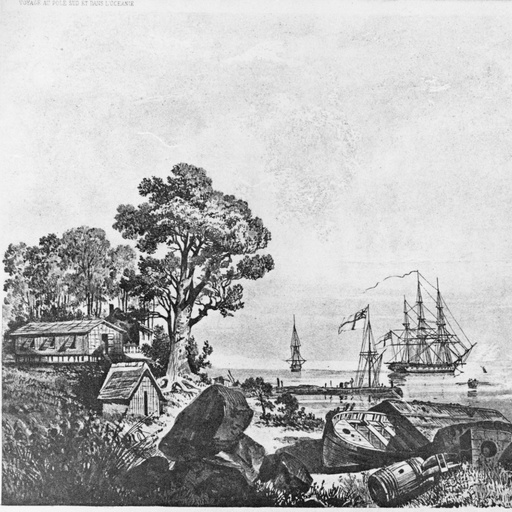
Port Essington: A Brief Yet Significant Chapter in Australian History

Port Essington, nestled in the Northern Territory, stands as a testament to Australia’s colonial past. Established in 1842 as a British settlement, its story unfolds as a captivating narrative of ambition, struggle, and ultimately, the pursuit of progress. Despite its short-lived existence, Port Essington left an indelible mark on Australian history, both politically and economically.

At the dawn of the 19th century, Australia was a land ripe with potential, beckoning explorers and settlers to its shores. Seeking to expand their influence in the region, the British turned their gaze towards the Northern Territory, envisioning Port Essington as a strategic outpost in the Asia-Pacific trade network. Named after Vice-Admiral Sir William Essington, the settlement was intended to serve as a hub for commerce and maritime activity.

The establishment of Port Essington represented a convergence of interests, with the British government, merchants, and explorers all eager to capitalize on the region’s resources. Situated on the Cobourg Peninsula, the settlement boasted a natural harbor and fertile lands, ideal for agriculture and trade. However, its remote location posed logistical challenges, necessitating substantial investment in infrastructure and manpower.

Despite these obstacles, Port Essington flourished in its early years, attracting a diverse array of settlers and traders from across the globe. The settlement became a melting pot of cultures, with Indigenous Australians, Europeans, and Asians coexisting in a vibrant community. This cultural exchange enriched the social fabric of Port Essington, shaping its identity as a cosmopolitan outpost in the Australian frontier.

Economically, Port Essington played a pivotal role in the development of northern Australia, serving as a gateway to the continent’s untapped resources. Timber, pearls, and spices flowed through its ports, fueling trade routes that spanned the Pacific Ocean. The settlement’s strategic location also facilitated diplomatic relations with neighboring countries, positioning Australia as a key player in the geopolitics of the region.

The Settlement at Port Essington, 1839

However, Port Essington’s prosperity was short-lived, as the harsh realities of colonial life began to take their toll. Disease, isolation, and conflicts with Indigenous peoples plagued the settlement, undermining its viability as a sustainable outpost. As the costs of maintaining Port Essington mounted, the British government faced mounting pressure to abandon the venture.

In 1849, just seven years after its establishment, Port Essington was officially abandoned, marking the end of an era in Australian history. While its demise may have seemed like a setback at the time, the legacy of Port Essington endures to this day. The settlement’s brief yet impactful existence laid the groundwork for future developments in northern Australia, paving the way for subsequent waves of colonization and exploration.

Today, Port Essington stands as a testament to Australia’s colonial past, a reminder of the aspirations and challenges that shaped the nation’s trajectory. Its ruins serve as a poignant reminder of the human endeavor that once thrived in this remote corner of the continent, leaving an indelible mark on the landscape and the collective memory of Australians.

In conclusion, the significance of Port Essington in Australian history cannot be overstated. From its humble beginnings as a British outpost to its eventual abandonment, the settlement encapsulates the complexities of colonialism and the enduring legacy of exploration. While its time may have been fleeting, the impact of Port Essington resonates to this day, reminding us of the rich tapestry of Australia’s past.

Blaxland, Lawson, and Wentworth’s Epic Journey Across the Blue Mountains

In the heart of the early 19th century, the vast and untamed wilderness of Australia lay before explorers like an enigma waiting to be unraveled. It was a time when the distant horizon whispered tales of uncharted lands, beckoning adventurers to forge paths where none had tread before. Among those intrepid souls were Gregory Blaxland, William Lawson, and William Wentworth, whose names would become synonymous with one of the most daring expeditions in Australian history.

It was the year 1813 when the trio, fueled by curiosity and a spirit of adventure, set their sights on conquering the formidable barrier known as the Blue Mountains. Stretching across the western horizon of Sydney, these rugged peaks had long thwarted attempts to penetrate the mysterious hinterlands beyond. But Blaxland, Lawson, and Wentworth were undeterred, driven by a fervent desire to unlock the secrets of the unknown.

As they embarked on their journey, the air crackled with anticipation, and the wilderness seemed to hold its breath in anticipation of their audacious endeavor. With supplies strapped to their backs and determination etched into their hearts, the trio ventured forth into the heart of the unknown.

The landscape unfolded before them in all its raw and untamed beauty. Towering eucalyptus trees whispered secrets of the ages, while the distant cry of native birds echoed through the valleys. Yet, amidst this natural splendor, lay the formidable challenge that would test the limits of their endurance.

The Blue Mountains rose before them like a fortress, their sheer cliffs and dense forests standing as sentinels guarding the gateway to the vast interior. But Blaxland, Lawson, and Wentworth were not to be deterred. With each step, they pressed onward, hacking through dense undergrowth and scaling treacherous slopes with unwavering resolve.

Days turned into weeks as they battled against nature’s formidable defenses. They faced perilous terrain, unforgiving weather, and the constant threat of exhaustion. Yet, through sheer grit and determination, they persisted, driven by the promise of discovery that lay just beyond the horizon.

And then, after weeks of relentless struggle, victory finally lay within their grasp. On May 11, 1813, Blaxland, Lawson, and Wentworth stood atop a windswept ridge, gazing out over the vast expanse of the Australian interior. Below them stretched a land of boundless opportunity, ripe for exploration and settlement.

monument dedicated to Blaxland, Wentworth and Lawson of 1813, created in 1969 by W. F. Gilroy and R. Gilroy

Their achievement would herald a new era of inland exploration and settlement, opening up vast tracts of land for colonization and development. The discovery of a route across the Blue Mountains would pave the way for future pioneers, providing access to fertile grazing lands and untapped natural resources.

Yet, their triumph was not without its challenges. The harsh realities of life in the wilderness would test their mettle to the fullest. They would face the constant threat of conflict with indigenous peoples, as well as the hardships of isolation and scarcity.

But through it all, the legacy of Blaxland, Lawson, and Wentworth would endure as a testament to the indomitable spirit of exploration. Their names would be etched into the annals of history, remembered as pioneers who dared to defy the odds and chart a course into the unknown.

As the sun dipped below the horizon, casting long shadows across the rugged landscape, Blaxland, Lawson, and Wentworth stood together, their faces illuminated by the flickering light of the campfire. Around them, the wilderness stretched out in all its untamed splendor, a vast canvas waiting to be explored.

And as they looked out upon the vast expanse before them, they knew that their journey was far from over. For beyond the horizon lay endless possibilities, beckoning them onward into the great unknown.

The Birth of South Australia: A Landmark in Australian History

The establishment of South Australia in 1836, not only marked the birth of a new colony but also laid the foundation for the vibrant city of Adelaide, which would go on to become one of Australia’s most important cultural and economic hubs. Let’s delve into the significance of this event and explore its backstory.

The early 19th century was a time of rapid expansion and exploration in the British Empire. As the British sought to assert their influence in distant lands, the concept of colonization took root, driven by a mix of economic interests, strategic considerations, and a desire to spread British civilization. Australia, with its vast, untamed landscapes, presented an enticing prospect for colonization.

Prior to the establishment of South Australia, the eastern seaboard of Australia had already been settled by British colonists, most notably in New South Wales and Tasmania. However, the interior of the continent remained largely unexplored and uninhabited by Europeans. It was against this backdrop that the idea of establishing a new colony in South Australia gained traction.

Edward Gibbon Wakefield; a photographic reproduction of an engraving showing Edward Wakefield sitting in a chair with two dogs resting beside him: Approximately 1840

One of the key figures behind the establishment of South Australia was Edward Gibbon Wakefield, a British politician and social reformer. Wakefield’s vision was to create a more orderly and planned approach to colonization, one that would avoid the pitfalls of previous endeavors. Central to his plan was the concept of systematic colonization, whereby land would be sold at a moderate price to settlers, with the proceeds used to fund the transportation of laborers and the development of infrastructure.

In 1834, the South Australian Colonization Act was passed by the British Parliament, paving the way for the establishment of the colony. Two years later, on December 28, 1836, South Australia was officially proclaimed, with Adelaide designated as its capital. The choice of Adelaide as the capital was no accident; its strategic location near the mouth of the River Torrens made it an ideal site for a new settlement.

The establishment of South Australia had far-reaching implications for the region and for Australia as a whole. Unlike previous colonies, which had been founded as convict settlements, South Australia was intended to be a free colony, attracting migrants from Britain and beyond with the promise of land and opportunity. This emphasis on free settlement would shape the character of South Australia and set it apart from its counterparts.

One of the most significant aspects of the South Australian experiment was its approach to land distribution. Instead of granting vast tracts of land to wealthy landowners, the colonial government implemented a system of land surveys and auctions, allowing ordinary settlers to purchase small parcels of land at an affordable price. This egalitarian approach democratized land ownership and fostered a strong sense of community among the early settlers.

Photo by Catarina Sousa on Pexels.com

Another key aspect of South Australia’s development was its commitment to public welfare and social reform. From the outset, the colony placed a strong emphasis on education, with the establishment of schools and libraries to promote literacy and learning. Efforts were also made to ensure the fair treatment of indigenous peoples, although these efforts were not always successful.

Over the years, Adelaide grew and prospered, becoming known for its wide streets, parklands, and elegant architecture. The city became a magnet for immigrants, drawn by the promise of a better life in the new colony. By the mid-19th century, South Australia had established itself as a thriving agricultural and commercial center, exporting wool, wheat, and minerals to markets around the world.

In conclusion, the establishment of South Australia in 1836 was a landmark event in Australian history, marking the beginning of a new chapter in the colonization of the continent. Through careful planning and innovative policies, the founders of South Australia laid the groundwork for a prosperous and progressive society, one that would leave an indelible mark on the history of Australia. Today, the legacy of South Australia lives on, as Adelaide continues to thrive as a dynamic and cosmopolitan city, reflecting the spirit of enterprise and innovation that has always defined the colony.

Unveiling Australia’s Western Frontier: The Birth of Swan River Colony

In the pages of Australian history, certain milestones stand as testament to the nation’s rich tapestry of colonization, culture, and heritage. Among these, the establishment of the Swan River Colony, later known as Perth, in 1829 holds a significant place. This pivotal event not only marked the dawn of European settlement in Western Australia but also set the stage for the transformation of an untamed frontier into a thriving urban center. Let’s delve into the backstory and significance of this momentous occasion.

The Backstory: The early 19th century was an era marked by the expansionist ambitions of European powers, eager to explore and exploit new territories across the globe. Australia, with its vast and uncharted lands, beckoned as a promising frontier for British colonization. By the late 1820s, the British government had already established settlements in the eastern part of the continent, notably Sydney and Hobart. However, the vast expanse of Western Australia remained largely uncharted and uninhabited by European settlers.

Enter Captain James Stirling, a visionary naval officer tasked with the exploration and surveying of Australia’s western coastline. Intrigued by the fertile lands and natural beauty of the Swan River region, Stirling saw great potential for establishing a new colony that could serve as a strategic outpost and agricultural hub. With the support of influential backers in Britain, including the Colonial Office and the Western Australian Land Company, Stirling embarked on a mission to realize his ambitious vision.

Captain James Stirling, R.N. Lieutenant-Governor of the Swan River colony, 1828-32

The Establishment of Swan River Colony: On 2nd May 1829, the HMS Parmelia, under the command of Captain Stirling, anchored off the shores of the Swan River, heralding the formal establishment of the Swan River Colony. With a diverse group of settlers onboard, including farmers, tradesmen, and skilled laborers, the fledgling colony began to take shape on the pristine shores of what would later become Perth.

The significance of this event cannot be overstated. For the first time, European settlers established a permanent foothold in Western Australia, marking the beginning of a new chapter in the region’s history. The fertile soils and temperate climate of the Swan River valley promised abundant opportunities for agriculture and settlement, attracting pioneers from across the British Empire.

Challenges and Triumphs: However, the journey towards building a prosperous colony was fraught with challenges. The initial years were marked by hardship, as settlers grappled with unfamiliar terrain, hostile indigenous resistance, and logistical difficulties. The failure of early agricultural ventures, coupled with the absence of adequate infrastructure, threatened to undermine the viability of the fledgling settlement.

Yet, despite these setbacks, the resilience and determination of the early colonists prevailed. Through perseverance and ingenuity, they gradually overcame adversity, establishing farms, businesses, and institutions that laid the foundation for future growth and prosperity. The establishment of Perth as the colony’s capital in 1829 further bolstered its significance as a focal point of economic and administrative activity in Western Australia.

Photo by Nothing Ahead on Pexels.com

Legacy and Impact: The legacy of the Swan River Colony endures to this day, shaping the cultural, economic, and social landscape of modern Australia. The pioneering spirit of its early settlers laid the groundwork for the development of Western Australia into a vibrant and dynamic state, renowned for its natural beauty, resource abundance, and entrepreneurial spirit.

Moreover, the establishment of Perth as a major urban center has positioned Western Australia as a key player in the nation’s economic trajectory, contributing significantly to industries such as mining, agriculture, and tourism. The multicultural fabric of contemporary Perth reflects the diverse heritage of its early settlers, fostering a rich tapestry of traditions, cuisines, and customs.

Conclusion: In retrospect, the founding of the Swan River Colony in 1829 stands as a testament to the spirit of exploration, enterprise, and resilience that defines the Australian identity. From humble beginnings on the shores of the Swan River, Perth has emerged as a vibrant metropolis, symbolizing the enduring legacy of those who dared to venture into the unknown. As we commemorate this historic milestone, let us celebrate the courage and vision of those who paved the way for a brighter future in Australia’s western frontier.

Willem Janszoon: Pioneering the Mapping of Australia’s Coastline

In the annals of history, certain figures stand out as trailblazers, whose courageous voyages redefine our understanding of the world. One such pioneer is Willem Janszoon, a Dutch explorer whose journey in the early 17th century marked a pivotal moment in Australia’s history. As the first European to map parts of Australia’s coastline, Janszoon’s expedition had far-reaching implications, shaping the course of exploration and colonization in the continent’s vast expanse.

Willem Janszoon embarked on his historic voyage aboard the Duyfken in 1606, commissioned by the Dutch East India Company to chart new trade routes in the East Indies. Little did he know that his journey would lead him to the shores of a mysterious landmass, previously unknown to Europeans. Sailing along the northern coast of Australia, Janszoon encountered the rugged terrain and unfamiliar landscapes that would forever alter the course of history.

Upon reaching the western shores of Cape York Peninsula, Janszoon and his crew made landfall, becoming the first Europeans to set foot on Australian soil. Their encounters with the indigenous inhabitants, whom they referred to as “Indians,” provided valuable insights into the native cultures and customs of the continent. Despite initial attempts at communication, cultural misunderstandings and clashes ensued, highlighting the complexities of cross-cultural interactions during this era of exploration.

Janszoon’s meticulous mapping of the coastline not only revealed the existence of a vast and uncharted land but also paved the way for future expeditions to explore and colonize Australia. His discoveries sparked a renewed interest in the region among European powers, leading to subsequent voyages by explorers such as James Cook and Abel Tasman. The detailed charts and navigational information provided by Janszoon’s expedition laid the foundation for further exploration and eventual colonization of Australia by the Dutch, British, and other European powers.

A DUTCH SHIP OF THE DUYFKEN TYPE AND TIME (MUTCH, 1942)

The impact of Janszoon’s exploration reverberates through the annals of Australian history, shaping its cultural, social, and economic landscape to this day. The mapping of Australia’s coastline facilitated trade and navigation, opening up new avenues for commerce and exploration in the region. Additionally, Janszoon’s encounter with indigenous peoples shed light on Australia’s rich and diverse cultural heritage, laying the groundwork for future interactions and exchanges between European settlers and Aboriginal communities.

In conclusion, Willem Janszoon’s expedition stands as a testament to the spirit of exploration and discovery that defined the Age of Discovery. His pioneering efforts in mapping Australia’s coastline not only expanded the boundaries of European knowledge but also left an indelible mark on the history of the continent. As we reflect on Janszoon’s legacy, let us strive to honor the complexities of Australia’s history and work towards a more inclusive and equitable future for all its inhabitants.

Blog at WordPress.com.

Up ↑