Bungaree: A Coastal Aboriginal Icon in Australian History

Certain figures in Australian history stand out for their resilience, adaptability, and the pivotal roles they played in shaping the nation’s narrative. Among them, the name Bungaree shines brightly. Born around 1775, Bungaree was a coastal Aboriginal man hailing from the Sydney area, whose life and interactions with early European explorers, notably Matthew Flinders, have secured him a lasting legacy. In this blog post, we delve into why Bungaree is so famous and well-known, and the profound significance he holds in Australian history.

Bungaree’s fame stems from his unique position as a cultural intermediary between Indigenous Australians and European settlers during a time of profound change and upheaval. As the British colonizers began to establish a presence in Australia in the late 18th and early 19th centuries, Bungaree emerged as a central figure in the unfolding drama of cross-cultural encounters.

One of the key reasons for Bungaree’s prominence is his role as a guide and interpreter for early explorers, most notably Matthew Flinders during his circumnavigation of Australia from 1801 to 1803. Bungaree accompanied Flinders on his historic voyage aboard the HMS Investigator, where his intimate knowledge of the coastal terrain, navigational skills, and diplomatic acumen proved invaluable. His presence facilitated communication with Indigenous communities along the way, easing tensions and fostering cooperation between disparate cultures.

But Bungaree was more than just a guide; he was a cultural ambassador, adept at navigating the complexities of colonial encounters. His charismatic personality, wit, and adaptability endeared him to both Indigenous Australians and European settlers alike. He became a familiar and respected figure in early Sydney society, often appearing in flamboyant attire and engaging in theatrical performances that captivated audiences.

Bungaree’s significance in Australian history lies not only in his role as a mediator between cultures but also in his embodiment of resilience and adaptability in the face of immense change. Despite the profound disruptions caused by European colonization, Bungaree navigated the shifting landscapes of power and identity with grace and determination.

Moreover, Bungaree challenged prevailing stereotypes and misconceptions about Indigenous peoples, offering a nuanced and multifaceted portrayal that defied simplistic categorization. He epitomized the complexity and richness of Indigenous cultures, while also embracing elements of European society, showcasing the fluidity and dynamism of cultural exchange.

In many ways, Bungaree’s life encapsulates the broader trajectory of Indigenous experiences in Australia during the colonial era. His story reflects the tensions between tradition and modernity, autonomy and dependence, resistance and accommodation. By occupying the liminal space between Indigenous and colonial worlds, Bungaree forced both Indigenous Australians and European settlers to confront the complexities of their shared history.

Bungaree’s enduring legacy extends beyond his own lifetime, shaping perceptions of Indigenous identity and history in Australia to this day. His story serves as a reminder of the resilience and agency of Indigenous peoples in the face of colonial oppression, while also highlighting the ongoing importance of cross-cultural dialogue and understanding.

In conclusion, Bungaree stands as a towering figure in Australian history, revered for his contributions as a navigator, diplomat, and cultural ambassador. His life and legacy serve as a testament to the enduring spirit of Indigenous resilience and the power of human connection to bridge divides and forge common ground. As Australia continues to grapple with the legacies of its colonial past, Bungaree’s story remains a source of inspiration and reflection, inviting us to confront the complexities of our shared history with empathy and understanding.

Unfurling the Veil of History: The Hougoumont’s Legacy in Australian History

In Australia’s history, the arrival of the Hougoumont in 1868 marks a pivotal moment that reverberates through time, echoing the end of an era while heralding the dawn of a new chapter. As the last convict ship to dock on the shores of Western Australia, its significance transcends its final voyage, encapsulating a narrative of punishment, resilience, and transformation.

The Hougoumont, a vessel laden not only with human cargo but also with the weight of a contentious past, embarked on its journey from England bound for Fremantle, Western Australia. Departing from the shores of Britain, it carried with it the echoes of an era characterized by societal upheaval and the evolving perceptions of justice and punishment.

The arrival of the Hougoumont in Western Australia in 1868 was symbolic of the culmination of a penal system that had defined Australia’s colonial history. For decades, convict transportation had been a cornerstone of British penal policy, shaping the demographics, culture, and landscape of the continent. However, as attitudes towards punishment shifted and the efficacy of transportation came under scrutiny, the era of mass convict migration drew to a close.

The significance of the Hougoumont’s arrival lies not only in its historical context but also in its broader implications for Australian society. The end of convict transportation marked a turning point in the nation’s identity, as it transitioned from a distant outpost of the British Empire to a burgeoning nation in its own right. The closure of this chapter paved the way for new narratives of immigration, settlement, and nation-building, shaping the fabric of modern Australia.

Moreover, the story of the Hougoumont is intertwined with the individual narratives of the men and women who found themselves aboard its decks. From petty thieves to political dissidents, each convict carried with them a unique tale of survival, resilience, and redemption. Their experiences, though varied and diverse, collectively contributed to the rich tapestry of Australian history, underscoring the complex interplay of punishment, rehabilitation, and social change.

Beyond its historical significance, the legacy of the Hougoumont endures as a testament to the resilience of the human spirit. For the convicts who endured the arduous journey across the seas, the arrival in Western Australia represented both an end and a new beginning. It was a moment of reckoning with the past and a chance to forge a future in a land of opportunity and uncertainty.

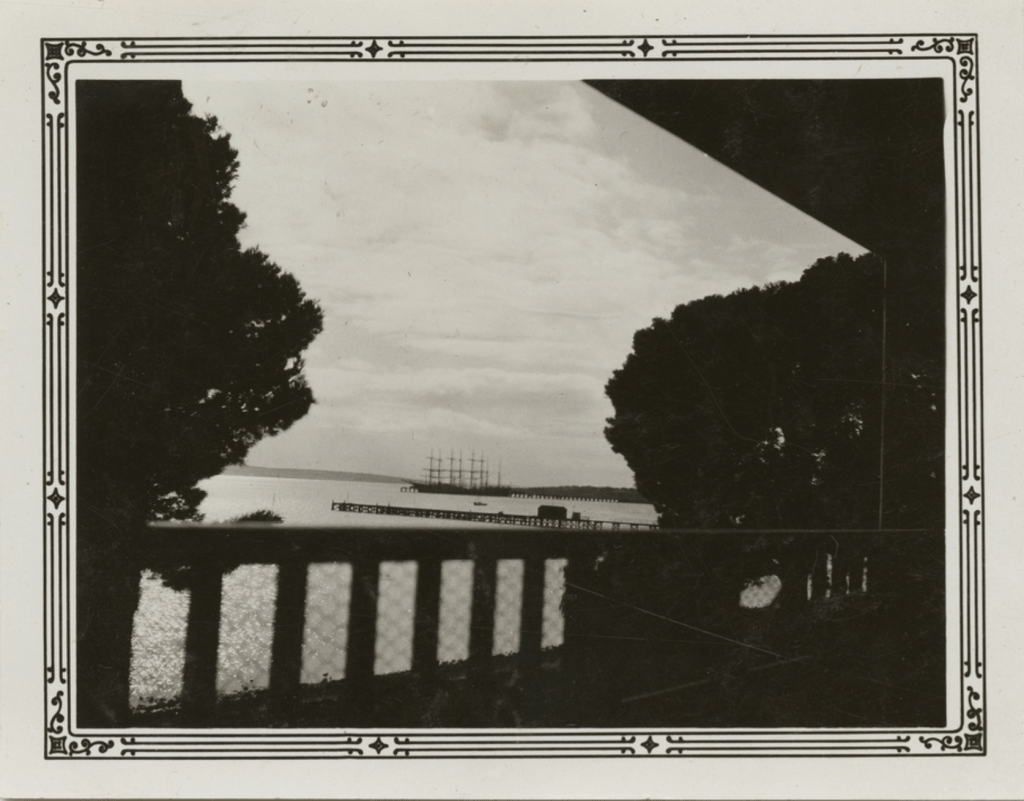
View across Boston Bay showing ‘Hougomont’ 5 March 1929

In commemorating the legacy of the Hougoumont, we are reminded of the complexities of Australia’s colonial history and the enduring impact of its convict past. It serves as a poignant reminder of the importance of confronting and acknowledging the darker chapters of our collective history, while also celebrating the resilience and diversity of the human experience.

As we reflect on the significance of the Hougoumont’s arrival in Western Australia in 1868, we are challenged to consider the broader implications of our shared history and the ways in which it continues to shape the identity and trajectory of our nation. In doing so, we honor the enduring legacy of those who embarked on that final journey, their stories woven into the fabric of Australia’s past, present, and future.

Port Essington: A Brief Yet Significant Chapter in Australian History

Port Essington, nestled in the Northern Territory, stands as a testament to Australia’s colonial past. Established in 1842 as a British settlement, its story unfolds as a captivating narrative of ambition, struggle, and ultimately, the pursuit of progress. Despite its short-lived existence, Port Essington left an indelible mark on Australian history, both politically and economically.

At the dawn of the 19th century, Australia was a land ripe with potential, beckoning explorers and settlers to its shores. Seeking to expand their influence in the region, the British turned their gaze towards the Northern Territory, envisioning Port Essington as a strategic outpost in the Asia-Pacific trade network. Named after Vice-Admiral Sir William Essington, the settlement was intended to serve as a hub for commerce and maritime activity.

The establishment of Port Essington represented a convergence of interests, with the British government, merchants, and explorers all eager to capitalize on the region’s resources. Situated on the Cobourg Peninsula, the settlement boasted a natural harbor and fertile lands, ideal for agriculture and trade. However, its remote location posed logistical challenges, necessitating substantial investment in infrastructure and manpower.

Despite these obstacles, Port Essington flourished in its early years, attracting a diverse array of settlers and traders from across the globe. The settlement became a melting pot of cultures, with Indigenous Australians, Europeans, and Asians coexisting in a vibrant community. This cultural exchange enriched the social fabric of Port Essington, shaping its identity as a cosmopolitan outpost in the Australian frontier.

Economically, Port Essington played a pivotal role in the development of northern Australia, serving as a gateway to the continent’s untapped resources. Timber, pearls, and spices flowed through its ports, fueling trade routes that spanned the Pacific Ocean. The settlement’s strategic location also facilitated diplomatic relations with neighboring countries, positioning Australia as a key player in the geopolitics of the region.

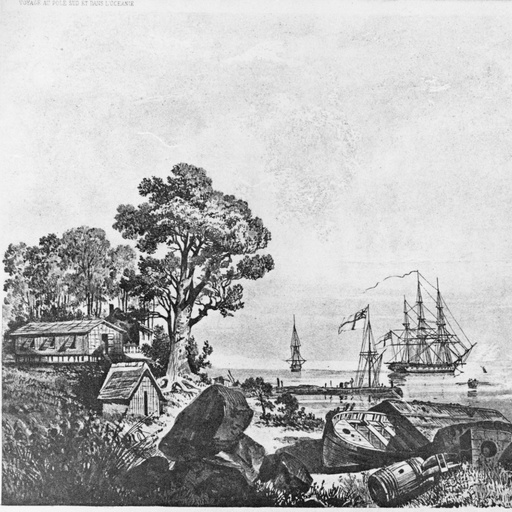
The Settlement at Port Essington, 1839

However, Port Essington’s prosperity was short-lived, as the harsh realities of colonial life began to take their toll. Disease, isolation, and conflicts with Indigenous peoples plagued the settlement, undermining its viability as a sustainable outpost. As the costs of maintaining Port Essington mounted, the British government faced mounting pressure to abandon the venture.

In 1849, just seven years after its establishment, Port Essington was officially abandoned, marking the end of an era in Australian history. While its demise may have seemed like a setback at the time, the legacy of Port Essington endures to this day. The settlement’s brief yet impactful existence laid the groundwork for future developments in northern Australia, paving the way for subsequent waves of colonization and exploration.

Today, Port Essington stands as a testament to Australia’s colonial past, a reminder of the aspirations and challenges that shaped the nation’s trajectory. Its ruins serve as a poignant reminder of the human endeavor that once thrived in this remote corner of the continent, leaving an indelible mark on the landscape and the collective memory of Australians.

In conclusion, the significance of Port Essington in Australian history cannot be overstated. From its humble beginnings as a British outpost to its eventual abandonment, the settlement encapsulates the complexities of colonialism and the enduring legacy of exploration. While its time may have been fleeting, the impact of Port Essington resonates to this day, reminding us of the rich tapestry of Australia’s past.

Blaxland, Lawson, and Wentworth’s Epic Journey Across the Blue Mountains

In the heart of the early 19th century, the vast and untamed wilderness of Australia lay before explorers like an enigma waiting to be unraveled. It was a time when the distant horizon whispered tales of uncharted lands, beckoning adventurers to forge paths where none had tread before. Among those intrepid souls were Gregory Blaxland, William Lawson, and William Wentworth, whose names would become synonymous with one of the most daring expeditions in Australian history.

It was the year 1813 when the trio, fueled by curiosity and a spirit of adventure, set their sights on conquering the formidable barrier known as the Blue Mountains. Stretching across the western horizon of Sydney, these rugged peaks had long thwarted attempts to penetrate the mysterious hinterlands beyond. But Blaxland, Lawson, and Wentworth were undeterred, driven by a fervent desire to unlock the secrets of the unknown.

As they embarked on their journey, the air crackled with anticipation, and the wilderness seemed to hold its breath in anticipation of their audacious endeavor. With supplies strapped to their backs and determination etched into their hearts, the trio ventured forth into the heart of the unknown.

The landscape unfolded before them in all its raw and untamed beauty. Towering eucalyptus trees whispered secrets of the ages, while the distant cry of native birds echoed through the valleys. Yet, amidst this natural splendor, lay the formidable challenge that would test the limits of their endurance.

The Blue Mountains rose before them like a fortress, their sheer cliffs and dense forests standing as sentinels guarding the gateway to the vast interior. But Blaxland, Lawson, and Wentworth were not to be deterred. With each step, they pressed onward, hacking through dense undergrowth and scaling treacherous slopes with unwavering resolve.

Days turned into weeks as they battled against nature’s formidable defenses. They faced perilous terrain, unforgiving weather, and the constant threat of exhaustion. Yet, through sheer grit and determination, they persisted, driven by the promise of discovery that lay just beyond the horizon.

And then, after weeks of relentless struggle, victory finally lay within their grasp. On May 11, 1813, Blaxland, Lawson, and Wentworth stood atop a windswept ridge, gazing out over the vast expanse of the Australian interior. Below them stretched a land of boundless opportunity, ripe for exploration and settlement.

monument dedicated to Blaxland, Wentworth and Lawson of 1813, created in 1969 by W. F. Gilroy and R. Gilroy

Their achievement would herald a new era of inland exploration and settlement, opening up vast tracts of land for colonization and development. The discovery of a route across the Blue Mountains would pave the way for future pioneers, providing access to fertile grazing lands and untapped natural resources.

Yet, their triumph was not without its challenges. The harsh realities of life in the wilderness would test their mettle to the fullest. They would face the constant threat of conflict with indigenous peoples, as well as the hardships of isolation and scarcity.

But through it all, the legacy of Blaxland, Lawson, and Wentworth would endure as a testament to the indomitable spirit of exploration. Their names would be etched into the annals of history, remembered as pioneers who dared to defy the odds and chart a course into the unknown.

As the sun dipped below the horizon, casting long shadows across the rugged landscape, Blaxland, Lawson, and Wentworth stood together, their faces illuminated by the flickering light of the campfire. Around them, the wilderness stretched out in all its untamed splendor, a vast canvas waiting to be explored.

And as they looked out upon the vast expanse before them, they knew that their journey was far from over. For beyond the horizon lay endless possibilities, beckoning them onward into the great unknown.

Blog at WordPress.com.

Up ↑