Tragedy and Triumph: The Burke and Wills Expedition

In the history of Australian exploration, few tales evoke the mix of bravery, ambition, and tragedy quite like the Burke and Wills expedition of 1860-1861. Led by Robert O’Hara Burke and William John Wills, this ambitious journey aimed to traverse the vast Australian continent from south to north, a feat never before accomplished. What began as a daring adventure ended in heartbreak, highlighting both the indomitable spirit of exploration and the harsh realities of the Australian wilderness.

The mid-19th century was an era of exploration and discovery, fueled by a fervent desire to unlock the secrets of the unknown. In this climate, the Royal Society of Victoria issued a challenge: to cross Australia from Melbourne in the south to the Gulf of Carpentaria in the north. Robert Burke, an Irish-born police officer, seized the opportunity, seeing it as a chance for fame and glory. With a team of men, including William Wills, a surveyor and astronomer, the expedition set forth on August 20, 1860, amidst cheers and fanfare from the crowds of Melbourne.

The expedition encountered its first obstacle in the form of rugged terrain and unpredictable weather. As they pushed through dense forests and arid plains, supplies dwindled, and tensions rose among the men. Yet, Burke’s determination remained unshaken, driving the team forward despite mounting challenges.

After months of grueling travel, Burke and a small group of men finally reached the northern coast, achieving their goal of crossing the continent. However, their triumph was short-lived. Unbeknownst to them, a relief party sent by the Royal Society had arrived at their base camp just hours earlier, missing each other by a cruel twist of fate. With provisions exhausted and morale low, the return journey became a desperate struggle for survival.

As the expedition retraced its steps southward, disaster struck. Weakened by starvation and disease, Burke, Wills, and several others succumbed to the unforgiving landscape. Their bodies were discovered by Aboriginal people, who provided them with a proper burial. The tragic fate of Burke and Wills captured the imagination of the nation, sparking both mourning and reflection on the perils of exploration.

Despite its tragic conclusion, the Burke and Wills expedition left an enduring legacy in Australian history. It brought attention to the harsh realities of the Australian interior and paved the way for future explorations and scientific endeavors. The courage and resilience displayed by the members of the expedition inspired subsequent generations of Australians to push the boundaries of knowledge and exploration.

The story of the Burke and Wills expedition serves as a poignant reminder of the human capacity for both triumph and tragedy. It is a testament to the adventurous spirit that drives us to explore the unknown, even in the face of great danger. Though their journey ended in sorrow, the legacy of Burke and Wills lives on, immortalized in the annals of Australian history.


The Telegraph Revolution: Connecting Australia in 1855

In the books of Australian history, 1855 marks a significant milestone—the establishment of the first telegraph line linking Melbourne to Williamstown. This technological marvel not only transformed communication within the continent but also played a pivotal role in shaping Australia’s social, economic, and political landscape. Let’s delve into this remarkable feat, its historical significance, and the challenges overcome in its implementation.

The telegraph’s arrival in Australia heralded a new era of communication, replacing traditional methods such as mail delivery and semaphore signaling. With the ability to transmit messages at unprecedented speeds, the telegraph facilitated instantaneous communication over vast distances, revolutionizing the way information was disseminated.

The significance of the Melbourne to Williamstown telegraph line cannot be overstated. It provided a vital link between two key points in Victoria, enabling swift communication between the bustling port city of Melbourne and its neighboring suburb of Williamstown. This connection proved indispensable for businesses, government agencies, and individuals alike, fostering economic growth, facilitating trade, and enhancing administrative efficiency.

Moreover, the telegraph line played a crucial role in enhancing Australia’s connectivity with the rest of the world. By establishing connections to international telegraph networks, Australia was no longer isolated, but rather integrated into the global communication network. This newfound connectivity not only bolstered trade and commerce but also facilitated the exchange of ideas, knowledge, and culture on an unprecedented scale.

However, the journey towards establishing the telegraph line was fraught with challenges. One of the most significant obstacles was the harsh and unforgiving Australian landscape. Spanning vast distances of rugged terrain, including dense forests, arid plains, and rugged mountains, laying the telegraph line presented formidable logistical challenges.

Furthermore, the harsh environmental conditions posed a threat to the telegraph infrastructure itself. From extreme heat and wildfires to floods and cyclones, the telegraph lines were constantly exposed to the elements, requiring meticulous maintenance and repair efforts to ensure uninterrupted communication.

Technical challenges also abounded during the installation of the telegraph line. Engineers and technicians had to overcome various technical hurdles, including designing and constructing sturdy telegraph poles, developing reliable transmission equipment, and establishing efficient operating procedures.

Moreover, the telegraph’s introduction was not without its skeptics and detractors. Some questioned the feasibility and utility of the telegraph, while others expressed concerns about its potential to undermine existing communication systems. However, these doubts were swiftly dispelled as the telegraph proved its worth, transforming communication in Australia and beyond.

In conclusion, the establishment of the first telegraph line in Australia between Melbourne and Williamstown in 1855 marked a watershed moment in the nation’s history. Not only did it revolutionize communication within the continent, but it also facilitated Australia’s integration into the global communication network. Despite facing numerous challenges, from harsh environmental conditions to technical obstacles, the telegraph persevered, leaving an indelible mark on Australian society and shaping its future trajectory.

The Birth of South Australia: A Landmark in Australian History

The establishment of South Australia in 1836, not only marked the birth of a new colony but also laid the foundation for the vibrant city of Adelaide, which would go on to become one of Australia’s most important cultural and economic hubs. Let’s delve into the significance of this event and explore its backstory.

The early 19th century was a time of rapid expansion and exploration in the British Empire. As the British sought to assert their influence in distant lands, the concept of colonization took root, driven by a mix of economic interests, strategic considerations, and a desire to spread British civilization. Australia, with its vast, untamed landscapes, presented an enticing prospect for colonization.

Prior to the establishment of South Australia, the eastern seaboard of Australia had already been settled by British colonists, most notably in New South Wales and Tasmania. However, the interior of the continent remained largely unexplored and uninhabited by Europeans. It was against this backdrop that the idea of establishing a new colony in South Australia gained traction.

Edward Gibbon Wakefield; a photographic reproduction of an engraving showing Edward Wakefield sitting in a chair with two dogs resting beside him: Approximately 1840

One of the key figures behind the establishment of South Australia was Edward Gibbon Wakefield, a British politician and social reformer. Wakefield’s vision was to create a more orderly and planned approach to colonization, one that would avoid the pitfalls of previous endeavors. Central to his plan was the concept of systematic colonization, whereby land would be sold at a moderate price to settlers, with the proceeds used to fund the transportation of laborers and the development of infrastructure.

In 1834, the South Australian Colonization Act was passed by the British Parliament, paving the way for the establishment of the colony. Two years later, on December 28, 1836, South Australia was officially proclaimed, with Adelaide designated as its capital. The choice of Adelaide as the capital was no accident; its strategic location near the mouth of the River Torrens made it an ideal site for a new settlement.

The establishment of South Australia had far-reaching implications for the region and for Australia as a whole. Unlike previous colonies, which had been founded as convict settlements, South Australia was intended to be a free colony, attracting migrants from Britain and beyond with the promise of land and opportunity. This emphasis on free settlement would shape the character of South Australia and set it apart from its counterparts.

One of the most significant aspects of the South Australian experiment was its approach to land distribution. Instead of granting vast tracts of land to wealthy landowners, the colonial government implemented a system of land surveys and auctions, allowing ordinary settlers to purchase small parcels of land at an affordable price. This egalitarian approach democratized land ownership and fostered a strong sense of community among the early settlers.

Photo by Catarina Sousa on Pexels.com

Another key aspect of South Australia’s development was its commitment to public welfare and social reform. From the outset, the colony placed a strong emphasis on education, with the establishment of schools and libraries to promote literacy and learning. Efforts were also made to ensure the fair treatment of indigenous peoples, although these efforts were not always successful.

Over the years, Adelaide grew and prospered, becoming known for its wide streets, parklands, and elegant architecture. The city became a magnet for immigrants, drawn by the promise of a better life in the new colony. By the mid-19th century, South Australia had established itself as a thriving agricultural and commercial center, exporting wool, wheat, and minerals to markets around the world.

In conclusion, the establishment of South Australia in 1836 was a landmark event in Australian history, marking the beginning of a new chapter in the colonization of the continent. Through careful planning and innovative policies, the founders of South Australia laid the groundwork for a prosperous and progressive society, one that would leave an indelible mark on the history of Australia. Today, the legacy of South Australia lives on, as Adelaide continues to thrive as a dynamic and cosmopolitan city, reflecting the spirit of enterprise and innovation that has always defined the colony.

Unveiling Australia’s Western Frontier: The Birth of Swan River Colony

In the pages of Australian history, certain milestones stand as testament to the nation’s rich tapestry of colonization, culture, and heritage. Among these, the establishment of the Swan River Colony, later known as Perth, in 1829 holds a significant place. This pivotal event not only marked the dawn of European settlement in Western Australia but also set the stage for the transformation of an untamed frontier into a thriving urban center. Let’s delve into the backstory and significance of this momentous occasion.

The Backstory: The early 19th century was an era marked by the expansionist ambitions of European powers, eager to explore and exploit new territories across the globe. Australia, with its vast and uncharted lands, beckoned as a promising frontier for British colonization. By the late 1820s, the British government had already established settlements in the eastern part of the continent, notably Sydney and Hobart. However, the vast expanse of Western Australia remained largely uncharted and uninhabited by European settlers.

Enter Captain James Stirling, a visionary naval officer tasked with the exploration and surveying of Australia’s western coastline. Intrigued by the fertile lands and natural beauty of the Swan River region, Stirling saw great potential for establishing a new colony that could serve as a strategic outpost and agricultural hub. With the support of influential backers in Britain, including the Colonial Office and the Western Australian Land Company, Stirling embarked on a mission to realize his ambitious vision.

Captain James Stirling, R.N. Lieutenant-Governor of the Swan River colony, 1828-32

The Establishment of Swan River Colony: On 2nd May 1829, the HMS Parmelia, under the command of Captain Stirling, anchored off the shores of the Swan River, heralding the formal establishment of the Swan River Colony. With a diverse group of settlers onboard, including farmers, tradesmen, and skilled laborers, the fledgling colony began to take shape on the pristine shores of what would later become Perth.

The significance of this event cannot be overstated. For the first time, European settlers established a permanent foothold in Western Australia, marking the beginning of a new chapter in the region’s history. The fertile soils and temperate climate of the Swan River valley promised abundant opportunities for agriculture and settlement, attracting pioneers from across the British Empire.

Challenges and Triumphs: However, the journey towards building a prosperous colony was fraught with challenges. The initial years were marked by hardship, as settlers grappled with unfamiliar terrain, hostile indigenous resistance, and logistical difficulties. The failure of early agricultural ventures, coupled with the absence of adequate infrastructure, threatened to undermine the viability of the fledgling settlement.

Yet, despite these setbacks, the resilience and determination of the early colonists prevailed. Through perseverance and ingenuity, they gradually overcame adversity, establishing farms, businesses, and institutions that laid the foundation for future growth and prosperity. The establishment of Perth as the colony’s capital in 1829 further bolstered its significance as a focal point of economic and administrative activity in Western Australia.

Photo by Nothing Ahead on Pexels.com

Legacy and Impact: The legacy of the Swan River Colony endures to this day, shaping the cultural, economic, and social landscape of modern Australia. The pioneering spirit of its early settlers laid the groundwork for the development of Western Australia into a vibrant and dynamic state, renowned for its natural beauty, resource abundance, and entrepreneurial spirit.

Moreover, the establishment of Perth as a major urban center has positioned Western Australia as a key player in the nation’s economic trajectory, contributing significantly to industries such as mining, agriculture, and tourism. The multicultural fabric of contemporary Perth reflects the diverse heritage of its early settlers, fostering a rich tapestry of traditions, cuisines, and customs.

Conclusion: In retrospect, the founding of the Swan River Colony in 1829 stands as a testament to the spirit of exploration, enterprise, and resilience that defines the Australian identity. From humble beginnings on the shores of the Swan River, Perth has emerged as a vibrant metropolis, symbolizing the enduring legacy of those who dared to venture into the unknown. As we commemorate this historic milestone, let us celebrate the courage and vision of those who paved the way for a brighter future in Australia’s western frontier.

Unearthing Justice: The Significance of the 1856 Eureka Rebellion in Australian History

In the annals of Australian history, the Eureka Rebellion of 1856 stands as a pivotal moment, a testament to the struggle for justice and the fight against oppressive systems. Nestled in the goldfields of Ballarat, Victoria, this uprising marked a turning point in the nation’s journey towards democracy and fair governance. Let’s delve into the events leading up to the rebellion, its significance, and the lasting legacy it has left on Australia.

To truly understand the significance of the Eureka Rebellion, one must grasp the context in which it unfolded. In the mid-19th century, Australia was in the throes of a gold rush, drawing thousands of hopeful prospectors to its shores in search of fortune. Ballarat, with its rich deposits of gold, emerged as a bustling hub of activity, attracting miners from far and wide.

However, beneath the glittering surface lay a harsh reality. The miners toiled under oppressive conditions, subject to exorbitant licensing fees, arbitrary regulations, and scant representation in the colonial government. The grievances simmered as frustrations mounted, eventually reaching a boiling point.

Eureka Rebellion Historic Precinct: Dept of Environment and Heritage

The catalyst for the rebellion came in the form of the Gold Fields Act of 1855, which imposed a monthly licensing fee on miners, regardless of their success in finding gold. This burden fell disproportionately on the poorer prospectors, many of whom struggled to make ends meet.

As tensions escalated, so too did the calls for reform. The miners organized themselves, forming the Ballarat Reform League to advocate for their rights. Demands for fairer treatment, representation in government, and the abolition of the despised license fees reverberated throughout the goldfields.

On the fateful morning of December 3, 1854, the simmering discontent erupted into open rebellion. The authorities, fearing an uprising, moved to quell the unrest, leading to a confrontation at the Eureka Stockade. In the ensuing chaos, shots were fired, and lives were lost on both sides.

Though short-lived, the rebellion sent shockwaves across the colony and reverberated throughout the British Empire. The miners’ stand for justice and their willingness to sacrifice for their cause captured the imagination of the nation, galvanizing support for their plight.

In the aftermath of the rebellion, the government launched a crackdown, rounding up the ringleaders and suppressing dissent. However, the spirit of Eureka lived on, fueling calls for reform and ultimately leading to significant changes in the governance of the colony.

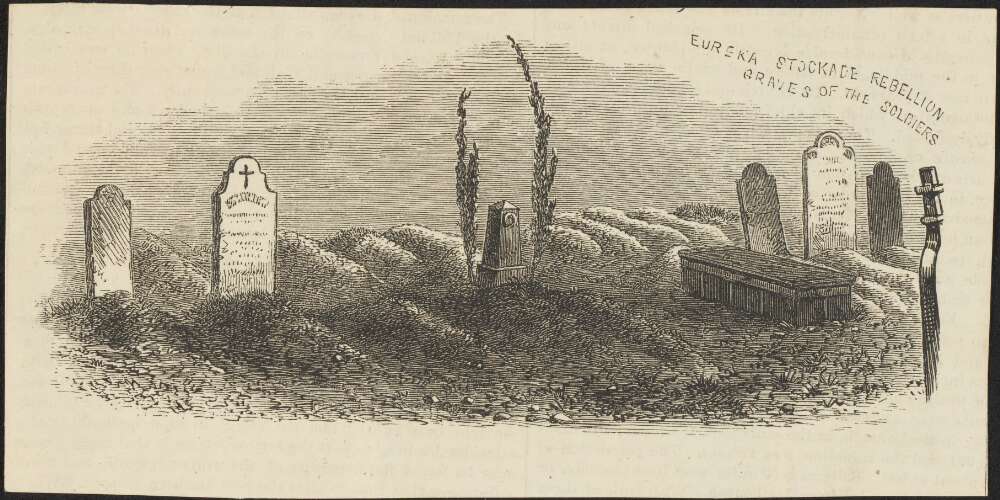
Eureka Stockade rebellion, graves of the soldiers Retrieved March 4, 2024

The legacy of the rebellion is profound, shaping the course of Australian history in myriad ways. It paved the way for greater democratic participation, leading to the introduction of universal male suffrage and a more representative government. The principles of fairness, equality, and justice enshrined in the Eureka oath continue to resonate with Australians to this day.

The Eureka Rebellion of 1856 remains a defining moment in Australian history, a testament to the power of ordinary people to challenge injustice and demand change. It serves as a reminder of the enduring struggle for freedom and democracy, inspiring generations to come to uphold the values of fairness, equality, and justice. As we reflect on its significance, let us honor the memory of those who stood tall at Eureka and reaffirm our commitment to building a better, more just society for all.

The Last Stand of Pemulwuy: A Legacy of Resistance in Australian History

In the early light of an Australian dawn in the year 1802, amidst the eucalyptus trees and the whispering winds of the land Down Under, a figure stood, his silhouette etched against the rising sun. His name was Pemulwuy, a warrior of the Bidjigal people, a man whose life had been woven into the fabric of resistance against colonial encroachment.

Pemulwuy’s story begins years before, in the shadow of another dawn, when the first ships of British settlers cast their gaze upon the shores of the ancient land. It was a time of upheaval, of clashes between cultures, and of a struggle for survival unlike any the land had ever seen. In 1797, Pemulwuy had been gravely wounded by a gunshot, yet he had defied death’s grasp, emerging from the brink of mortality with a fierce determination burning in his heart.

Despite his injury, Pemulwuy continued to lead his people in acts of defiance against the British . His name became synonymous with resistance, his exploits whispered around campfires and passed down through generations. But as the years wore on, the noose of colonial authority tightened, and Pemulwuy found himself hunted like a beast.

It was in the year 1802 that the final chapter of Pemulwuy’s saga unfolded. Cornered by British forces, he stood tall, his eyes blazing with defiance, as the crack of gunfire echoed through the air. In that moment, a legend fell, his spirit ascending to join the ranks of the ancestors, leaving behind a legacy that would endure far beyond his mortal years.

The significance of Pemulwuy’s life and death reverberates through the annals of Australian history, casting a long shadow over the nation’s past and present. His story serves as a reminder of the resilience and strength of Indigenous peoples in the face of colonization, a testament to the enduring spirit of resistance that courses through the veins of the land.

Pemulwuy’s defiance paved the way for future generations of Indigenous leaders and activists, inspiring them to stand up against injustice and to reclaim their rightful place as custodians of the land. His name serves as a rallying cry for those who seek justice and reconciliation, a symbol of hope in a landscape scarred by centuries of oppression.

But perhaps most importantly, Pemulwuy’s legacy challenges us to confront the darker chapters of our nation’s history, to acknowledge the injustices of the past, and to work towards a future built on mutual respect and understanding. His story is not just a tale of resistance, but a call to action, urging us to strive for a more equitable and inclusive society for all who call Australia home.

As the sun sets on another day in the vast expanse of the Australian wilderness, Pemulwuy’s spirit lives on, his memory etched into the very fabric of the land itself. And though he may have fallen in battle, his legacy endures, a beacon of hope and inspiration for generations yet to come.

Unearthing Riches: The NSW and Victoria Gold Rushes of 1851

In the annals of Australian history, few events have left as indelible a mark as the gold rushes of the mid-19th century. Beginning in 1851, these frenzied quests for riches transformed the colonies of New South Wales (NSW) and Victoria, reshaping their landscapes, societies, and economies. Let’s delve into the significance of these gold rushes and their enduring impact on Australian history.

The NSW Gold Rush:

While NSW was not the epicenter of the gold rush phenomenon, it played a crucial role in sparking the frenzy. In February 1851, Edward Hargraves discovered gold near Bathurst, igniting excitement and triggering a rush of prospectors to the region. This discovery marked the beginning of Australia’s first gold rush.

The significance of the NSW gold rush lay not only in the precious metal unearthed but also in its role as a catalyst for the broader Australian gold rushes. Hargraves’ find demonstrated that Australia held vast untapped reserves of gold, inspiring prospectors to venture further afield in search of fortune.

The Victorian Gold Rush:

However, it was Victoria that would become the epicenter of the gold rush phenomenon, surpassing NSW in both scale and significance. In July 1851, gold was discovered in the streams near Clunes, sparking a rush that would transform the remote colony into a thriving hub of activity.

Victoria’s gold rush was characterized by its sheer magnitude. The discovery of rich gold deposits in Ballarat, Bendigo, and other areas drew fortune-seekers from across the globe, swelling the colony’s population and propelling it into economic prominence. The influx of migrants, including many from China, brought cultural diversity and contributed to the shaping of modern Australian society.

GABENSIS, NEW GUINEA, 1944-03-02. NG2464 WARRANT OFFICER II, HENRY J. O’KENE, AUSTRALIAN NEW GUINEA ADMINISTRATIVE UNIT REPRESENTATIVE AT GABENSIS, (1), A FORMER MINER IN THE GOLD RUSH 

Significance in Australian History:

The gold rushes of NSW and Victoria were pivotal moments in Australian history, leaving a profound and lasting impact on the nation. Here’s why they are considered significant:

  1. Economic Transformation: The gold rushes propelled Australia from a remote colonial outpost to a prosperous nation almost overnight. The influx of gold brought immense wealth, driving economic growth, infrastructure development, and urbanization.
  2. Population Growth and Diversity: The gold rushes triggered unprecedented population growth as people from all walks of life flocked to the goldfields in search of fortune. This influx of migrants, including Europeans, Americans, and Chinese immigrants, contributed to the cultural diversity that defines modern Australia.
  3. Political and Social Change: The gold rushes brought about significant political and social changes. The newfound wealth and population growth led to demands for greater autonomy and representation, ultimately paving the way for the democratization of the colonies and the eventual formation of the Australian nation.
  4. Environmental Impact: The gold rushes had profound environmental consequences, with widespread deforestation, erosion, and pollution resulting from mining activities. These environmental legacies continue to be felt today, underscoring the importance of sustainable resource management.

In conclusion, the gold rushes of NSW and Victoria were watershed moments in Australian history, shaping the nation’s identity, economy, and society in profound ways. Their legacy endures as a testament to the pioneering spirit and resilience of those who sought their fortunes in the rugged landscapes of the Australian colonies.

Watch this fantastic video from the national museum of Australia to learn more!

Unveiling the Castle Hill Rebellion of 1804: A Pivotal Moment in Australian History

In 1804 the nation experienced the This tumultuous uprising, shrouded in the complexities of colonial power dynamics and the struggle for freedom, stands as a testament to the resilience and determination of those who dared to challenge the status quo. As we delve into the depths of this historic rebellion, we uncover not only the events that transpired but also the profound implications it had on the course of Australian history.

To comprehend the significance of the Castle Hill Rebellion, one must first grasp the socio-political landscape of early 19th-century Australia. In the fledgling colony of New South Wales, tensions simmered among the disparate groups that populated its shores. Convicts, many of whom had been transported from Britain for crimes both real and imagined, toiled under harsh conditions, while a privileged elite, comprising military officers and colonial administrators, wielded power with impunity. Amidst this backdrop of inequality and oppression, discontent festered, laying the groundwork for rebellion.

The roots of the Castle Hill Rebellion can be traced to the oppressive policies of Governor William Bligh, whose despotic rule fuelled resentment among the convict population. Bligh’s heavy-handed tactics, including his attempts to curb the illicit trade in rum, earned him the ire of many, particularly those with vested interests in the flourishing rum trade. As tensions escalated, rumours of rebellion began to circulate, finding fertile ground among the disaffected.

On the fateful day of March 4, 1804, the simmering discontent erupted into open rebellion. Led by Irish convicts, who saw parallels between their own struggle for independence and the fight against British oppression in their homeland, a motley crew of rebels seized control of the government farm at Castle Hill. Armed with makeshift weapons and fueled by a fervent desire for freedom, they marched towards Sydney, intent on overthrowing the colonial authorities.

However, their plans were soon thwarted by a combination of strategic blunders and the swift response of government forces. The rebellion was swiftly crushed, with scores of rebels captured or killed in the ensuing conflict. Those who survived faced harsh reprisals, including public execution and exile to the distant reaches of the colony.

While the Castle Hill Rebellion may have been short-lived, its significance reverberated far beyond the confines of colonial New South Wales. It served as a stark reminder of the inherent injustices of the convict system and the deep-seated desire for freedom that burned within the hearts of those subjected to its tyranny. Moreover, it catalyzed efforts to reform the colonial administration, paving the way for greater political autonomy and democratic governance in the years to come.

In the tapestry of Australian history, the Castle Hill Rebellion occupies a prominent place, serving as a testament to the indomitable spirit of those who dared to defy the odds in pursuit of liberty. As we reflect on the events of 1804, let us remember the sacrifices made by those who fought for a brighter future, and let us draw inspiration from their courage as we continue the ongoing quest for justice and equality.

Remembering Harry “Breaker” Morant: A Notorious Chapter in Australian History

On February 27th, we solemnly mark a significant event in Australian history: the execution of Harry “Breaker” Morant. Over a century ago, on this day in 1902, Morant, a horseman, soldier, and poet, met his tragic fate at the hands of British authorities during the closing stages of the Second Boer War.

Born in England in 1864, Morant eventually found his way to Australia, where he became known for his equestrian skills and adventurous spirit. However, it was his involvement in the Boer War that would etch his name into the annals of history.

Photo by Joe Ambrogio on Pexels.com

Morant joined the Bushveldt Carbineers, a mounted infantry unit composed mainly of Australian volunteers, and quickly rose to prominence for his bravery and leadership on the battlefield. Yet, amidst the chaos of war, Morant and his compatriots found themselves embroiled in controversy.

Accusations of executing prisoners and civilians without trial tarnished Morant’s reputation and led to his arrest and subsequent court-martial. The trial, held in Pietersburg, South Africa, was fraught with controversy, with many questioning the fairness of the proceedings.

Despite pleas for clemency from the Australian public and prominent figures, including the Australian Prime Minister at the time, Edmund Barton, Morant, and his co-defendant, Peter Handcock, were sentenced to death. On that fateful day, February 27th, 1902, Morant and Handcock faced the firing squad, becoming martyrs in the eyes of many Australians.

The execution of Morant and Handcock left a profound impact on Australian society, sparking debates about loyalty, justice, and the relationship between Australia and Britain. It highlighted the complexities of war and the moral dilemmas faced by soldiers caught in its midst.

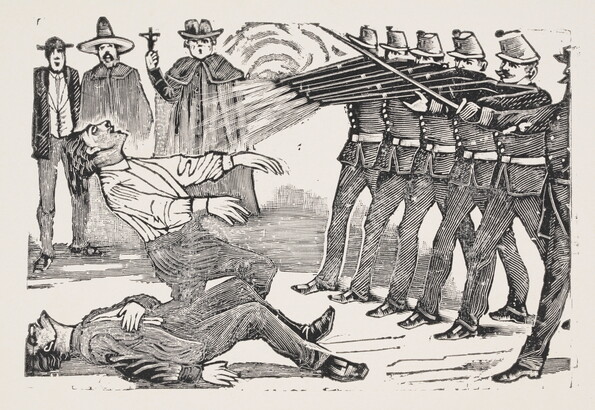
José Guadalupe Posada (1852-1913) [Firing squad] ca. 1890-1913
Relief print Amon Carter Museum of American Art, Fort Worth, Texas 1978.384.38

In the years following Morant’s death, his story captured the imagination of Australians, inspiring numerous books, plays, and films, including the iconic 1980 film “Breaker Morant,” directed by Bruce Beresford. These works sought to explore the man behind the myth, shedding light on the circumstances surrounding his life and death.

Today, Harry “Breaker” Morant remains a controversial figure, revered by some as a patriot and condemned by others as a war criminal. Regardless of one’s interpretation, his legacy endures as a reminder of the human cost of conflict and the enduring quest for justice.

As we reflect on this day in history, let us honor the memory of Harry “Breaker” Morant and never forget the sacrifices made by those who came before us in the pursuit of freedom and dignity

Australia’s First Coin: The Holey Dollar

In the history pages of currency, there are few tales as captivating as that of Australia’s first coin – the Holey Dollar. Dating back to the year 1814, this unique piece of currency holds within its perforated edges a story of colonial innovation, economic necessity, and the enduring spirit of adaptation.

The Colonial Conundrum

In the early 19th century, the British colony of New South Wales faced a pressing issue: a severe shortage of currency. With a growing population and thriving trade, the colony sorely lacked sufficient coinage to facilitate daily transactions. This scarcity led to a reliance on bartering and the use of diverse currencies, ranging from Spanish dollars to rum and even promissory notes.

Governor Lachlan Macquarie’s Solution

Governor Lachlan Macquarie, the visionary leader of New South Wales at the time, recognized the urgency of the situation. To address the currency shortage, he devised a bold plan – the transformation of Spanish silver dollars into two distinct coins: the Holey Dollar and the Dump.

The Birth of the Holey Dollar

The process began with the acquisition of Spanish dollars, which were then stamped with a circular hole in the center, effectively creating two coins – the larger outer ring, known as the Holey Dollar, and the smaller inner disc, referred to as the Dump. These coins were then counterstamped with the colony’s name, value, and year of issue.

Symbolism and Significance

The creation of the Holey Dollar symbolized more than just a pragmatic solution to a currency shortage; it represented the ingenuity and adaptability of the early settlers in Australia. By repurposing existing resources, Governor Macquarie effectively addressed a pressing economic need and laid the foundation for a more stable monetary system in the colony.

Legacy and Collectibility

Today, the Holey Dollar stands as a cherished relic of Australia’s colonial past. With its distinctive design and rich historical significance, it has become a prized collectible among numismatists and historians alike. The scarcity of these coins, coupled with their unique origin story, has contributed to their enduring allure and value.

Conclusion

The induction of Australia’s first coin, the Holey Dollar, in 1814, marked a pivotal moment in the nation’s economic history. Born out of necessity and innovation, this distinctive currency symbolizes the resilience and resourcefulness of early colonial settlers. As we reflect on its legacy, we are reminded of the enduring impact of ingenuity in the face of adversity and the power of creative solutions to shape the course of history.

Blog at WordPress.com.

Up ↑