
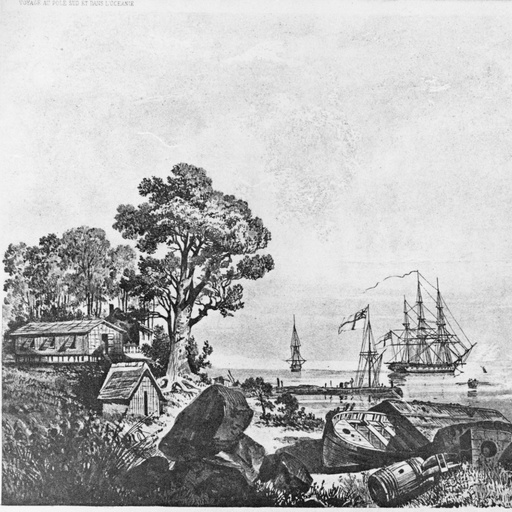
Port Essington, nestled in the Northern Territory, stands as a testament to Australia’s colonial past. Established in 1842 as a British settlement, its story unfolds as a captivating narrative of ambition, struggle, and ultimately, the pursuit of progress. Despite its short-lived existence, Port Essington left an indelible mark on Australian history, both politically and economically.
At the dawn of the 19th century, Australia was a land ripe with potential, beckoning explorers and settlers to its shores. Seeking to expand their influence in the region, the British turned their gaze towards the Northern Territory, envisioning Port Essington as a strategic outpost in the Asia-Pacific trade network. Named after Vice-Admiral Sir William Essington, the settlement was intended to serve as a hub for commerce and maritime activity.
The establishment of Port Essington represented a convergence of interests, with the British government, merchants, and explorers all eager to capitalize on the region’s resources. Situated on the Cobourg Peninsula, the settlement boasted a natural harbor and fertile lands, ideal for agriculture and trade. However, its remote location posed logistical challenges, necessitating substantial investment in infrastructure and manpower.
Despite these obstacles, Port Essington flourished in its early years, attracting a diverse array of settlers and traders from across the globe. The settlement became a melting pot of cultures, with Indigenous Australians, Europeans, and Asians coexisting in a vibrant community. This cultural exchange enriched the social fabric of Port Essington, shaping its identity as a cosmopolitan outpost in the Australian frontier.
Economically, Port Essington played a pivotal role in the development of northern Australia, serving as a gateway to the continent’s untapped resources. Timber, pearls, and spices flowed through its ports, fueling trade routes that spanned the Pacific Ocean. The settlement’s strategic location also facilitated diplomatic relations with neighboring countries, positioning Australia as a key player in the geopolitics of the region.

However, Port Essington’s prosperity was short-lived, as the harsh realities of colonial life began to take their toll. Disease, isolation, and conflicts with Indigenous peoples plagued the settlement, undermining its viability as a sustainable outpost. As the costs of maintaining Port Essington mounted, the British government faced mounting pressure to abandon the venture.
In 1849, just seven years after its establishment, Port Essington was officially abandoned, marking the end of an era in Australian history. While its demise may have seemed like a setback at the time, the legacy of Port Essington endures to this day. The settlement’s brief yet impactful existence laid the groundwork for future developments in northern Australia, paving the way for subsequent waves of colonization and exploration.
Today, Port Essington stands as a testament to Australia’s colonial past, a reminder of the aspirations and challenges that shaped the nation’s trajectory. Its ruins serve as a poignant reminder of the human endeavor that once thrived in this remote corner of the continent, leaving an indelible mark on the landscape and the collective memory of Australians.
In conclusion, the significance of Port Essington in Australian history cannot be overstated. From its humble beginnings as a British outpost to its eventual abandonment, the settlement encapsulates the complexities of colonialism and the enduring legacy of exploration. While its time may have been fleeting, the impact of Port Essington resonates to this day, reminding us of the rich tapestry of Australia’s past.





 History Class Australia