Blaxland, Lawson, and Wentworth’s Epic Journey Across the Blue Mountains

In the heart of the early 19th century, the vast and untamed wilderness of Australia lay before explorers like an enigma waiting to be unraveled. It was a time when the distant horizon whispered tales of uncharted lands, beckoning adventurers to forge paths where none had tread before. Among those intrepid souls were Gregory Blaxland, William Lawson, and William Wentworth, whose names would become synonymous with one of the most daring expeditions in Australian history.

It was the year 1813 when the trio, fueled by curiosity and a spirit of adventure, set their sights on conquering the formidable barrier known as the Blue Mountains. Stretching across the western horizon of Sydney, these rugged peaks had long thwarted attempts to penetrate the mysterious hinterlands beyond. But Blaxland, Lawson, and Wentworth were undeterred, driven by a fervent desire to unlock the secrets of the unknown.

As they embarked on their journey, the air crackled with anticipation, and the wilderness seemed to hold its breath in anticipation of their audacious endeavor. With supplies strapped to their backs and determination etched into their hearts, the trio ventured forth into the heart of the unknown.

The landscape unfolded before them in all its raw and untamed beauty. Towering eucalyptus trees whispered secrets of the ages, while the distant cry of native birds echoed through the valleys. Yet, amidst this natural splendor, lay the formidable challenge that would test the limits of their endurance.

The Blue Mountains rose before them like a fortress, their sheer cliffs and dense forests standing as sentinels guarding the gateway to the vast interior. But Blaxland, Lawson, and Wentworth were not to be deterred. With each step, they pressed onward, hacking through dense undergrowth and scaling treacherous slopes with unwavering resolve.

Days turned into weeks as they battled against nature’s formidable defenses. They faced perilous terrain, unforgiving weather, and the constant threat of exhaustion. Yet, through sheer grit and determination, they persisted, driven by the promise of discovery that lay just beyond the horizon.

And then, after weeks of relentless struggle, victory finally lay within their grasp. On May 11, 1813, Blaxland, Lawson, and Wentworth stood atop a windswept ridge, gazing out over the vast expanse of the Australian interior. Below them stretched a land of boundless opportunity, ripe for exploration and settlement.

monument dedicated to Blaxland, Wentworth and Lawson of 1813, created in 1969 by W. F. Gilroy and R. Gilroy

Their achievement would herald a new era of inland exploration and settlement, opening up vast tracts of land for colonization and development. The discovery of a route across the Blue Mountains would pave the way for future pioneers, providing access to fertile grazing lands and untapped natural resources.

Yet, their triumph was not without its challenges. The harsh realities of life in the wilderness would test their mettle to the fullest. They would face the constant threat of conflict with indigenous peoples, as well as the hardships of isolation and scarcity.

But through it all, the legacy of Blaxland, Lawson, and Wentworth would endure as a testament to the indomitable spirit of exploration. Their names would be etched into the annals of history, remembered as pioneers who dared to defy the odds and chart a course into the unknown.

As the sun dipped below the horizon, casting long shadows across the rugged landscape, Blaxland, Lawson, and Wentworth stood together, their faces illuminated by the flickering light of the campfire. Around them, the wilderness stretched out in all its untamed splendor, a vast canvas waiting to be explored.

And as they looked out upon the vast expanse before them, they knew that their journey was far from over. For beyond the horizon lay endless possibilities, beckoning them onward into the great unknown.

The Arrival of Australia’s First Fleet of Female Convicts

A pivotal moment that shaped the demographics, culture, and societal fabric of the nation: the arrival of the first fleet of female convicts in 1788. This historic event marked the beginning of a new chapter in the colonization of Australia, significantly impacting the gender balance of the fledgling colony and presenting a host of challenges and opportunities for both the convicts and the settlers.

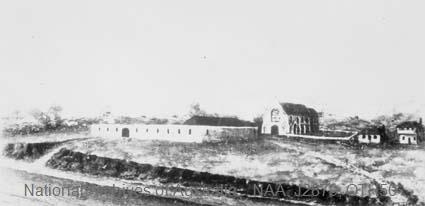
Photograph of early drawing – Moreton Bay Settlement with distant view of Female [convict] Factory 1832 – 1832

The Arrival: On January 26, 1788, the First Fleet, comprising 11 ships, sailed into Port Jackson, now known as Sydney Harbour. Among the nearly 1,500 convicts onboard were 192 women, whose arrival marked a significant departure from the predominantly male composition of the early colonial population. These women, often marginalized and forgotten in historical narratives, played a crucial role in shaping the future of Australia.

Impact on Gender Balance: The arrival of female convicts had a profound impact on the gender balance of the colony. Prior to their arrival, the male-to-female ratio in the settlement was heavily skewed, posing challenges for social cohesion and family formation. The presence of women provided a much-needed balance and contributed to the development of a more stable and sustainable society. Moreover, the influx of female convicts offered an opportunity for the establishment of family units, laying the foundation for future generations of Australians.

Challenges Faced: However, the arrival of female convicts also presented numerous challenges for both the women themselves and the broader colonial community. Many of these women were victims of social and economic inequality, driven to crime by poverty, desperation, or circumstance. Upon arrival, they faced harsh conditions, limited opportunities, and societal stigma. The challenges of navigating a new and unfamiliar environment, coupled with the stigma of their past, made it difficult for these women to integrate into colonial society.

Despite these challenges, many female convicts demonstrated resilience, resourcefulness, and determination in the face of adversity. Through their labor, ingenuity, and perseverance, they contributed to the development and growth of the colony, leaving an indelible mark on Australian history.

Legacy and Significance: The legacy of Australia’s first fleet of female convicts endures to this day, serving as a testament to the resilience and strength of those who endured hardship and adversity in the pursuit of a better life. Their stories remind us of the complexities of Australia’s colonial past and the diverse experiences of those who shaped the nation’s history.

Moreover, the arrival of female convicts challenged prevailing attitudes towards gender, class, and criminality, sparking debates about justice, rehabilitation, and the rights of women in colonial society. Their presence forced colonists to confront issues of gender inequality and social justice, laying the groundwork for future reforms and advancements in Australian society.

Sitting Room, Female Factory, Degraves Street, Hobart, Tasmania, Australia. By Stuart Smith.

Conclusion: The arrival of Australia’s first fleet of female convicts in 1788 marked a significant milestone in the nation’s history, shaping the demographic, cultural, and social landscape of the fledgling colony. Despite the challenges they faced, these women made invaluable contributions to the development and growth of Australia, leaving behind a legacy that continues to resonate to this day. Their stories serve as a reminder of the resilience, strength, and humanity of those who helped build the nation we know today.

Blog at WordPress.com.

Up ↑