
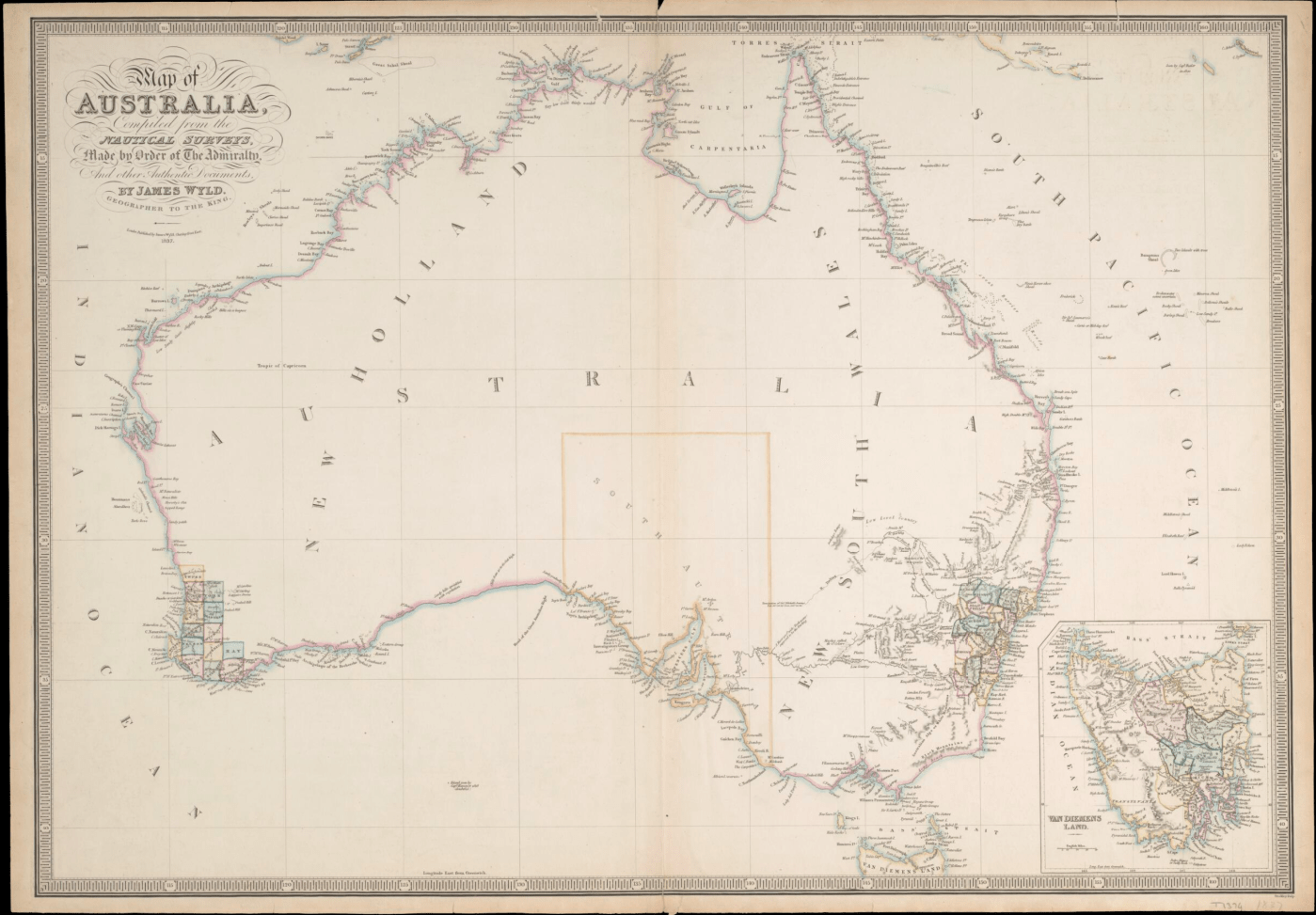
In the history pages of Australian exploration, few names stand as tall as that of Mathew Flinders. His circumnavigation of the continent in 1803, during which he bestowed the name “Australia” upon the landmass, marked a pivotal moment not only in geographical discovery but also in shaping the identity of a nation. In this blog post, we’ll delve into the significance of Flinders’ expedition and its lasting impact on Australian history.
The Early Days of Exploration: To understand the significance of Flinders’ journey, we must first contextualize it within the broader history of exploration in Australia. Even before Flinders’ time, European navigators such as Abel Tasman and James Cook had charted parts of the continent’s coastline. However, the interior remained largely unexplored and unknown.
Flinders’ Expedition: In 1801, Mathew Flinders set sail aboard the HMS Investigator, tasked with surveying the coastline of Terra Australis Incognita, as Australia was then known. Over the course of his voyage, Flinders meticulously charted vast stretches of the coast, filling in crucial gaps in European knowledge of the continent.
Circumnavigation and the Naming of Australia: It was during this voyage that Flinders achieved his most significant feat: the circumnavigation of Australia. Sailing around the entire coastline, he became the first person to conclusively prove that Australia was indeed a single landmass. Moreover, Flinders chose to name the continent “Australia,” a term derived from the Latin word “australis,” meaning southern. This decision not only provided a unifying name for the disparate regions of the continent but also cemented Australia’s place on the world map.
Scientific Contributions: Beyond his achievements in exploration, Flinders’ expedition had profound scientific implications. His meticulous mapping and observations of the coastline laid the groundwork for future scientific endeavors, including botanical and geological studies. Flinders’ documentation of Australia’s flora and fauna helped to shape early understandings of its biodiversity and ecology.
Legacy and Significance: The significance of Flinders’ circumnavigation extends far beyond the realm of exploration. His expedition played a crucial role in shaping Australia’s national identity and sense of place in the world. By bestowing the name “Australia” upon the continent, Flinders contributed to the emergence of a distinct Australian identity, separate from its European colonial origins.
Moreover, Flinders’ exploration paved the way for subsequent waves of colonization and settlement, fundamentally altering the course of Australian history. His maps and charts provided vital information for future navigators, traders, and settlers, facilitating the expansion of European influence across the continent.
Conclusion: In the pantheon of Australian explorers, Mathew Flinders occupies a central place. His circumnavigation of Australia in 1803, culminating in the naming of the continent, represents a watershed moment in the history of exploration and nation-building. Flinders’ expedition not only expanded European knowledge of Australia but also played a pivotal role in shaping its identity and destiny. Today, his legacy endures as a testament to the spirit of exploration and discovery that continues to define Australia’s national character.
 History Class Australia
Leave a comment