
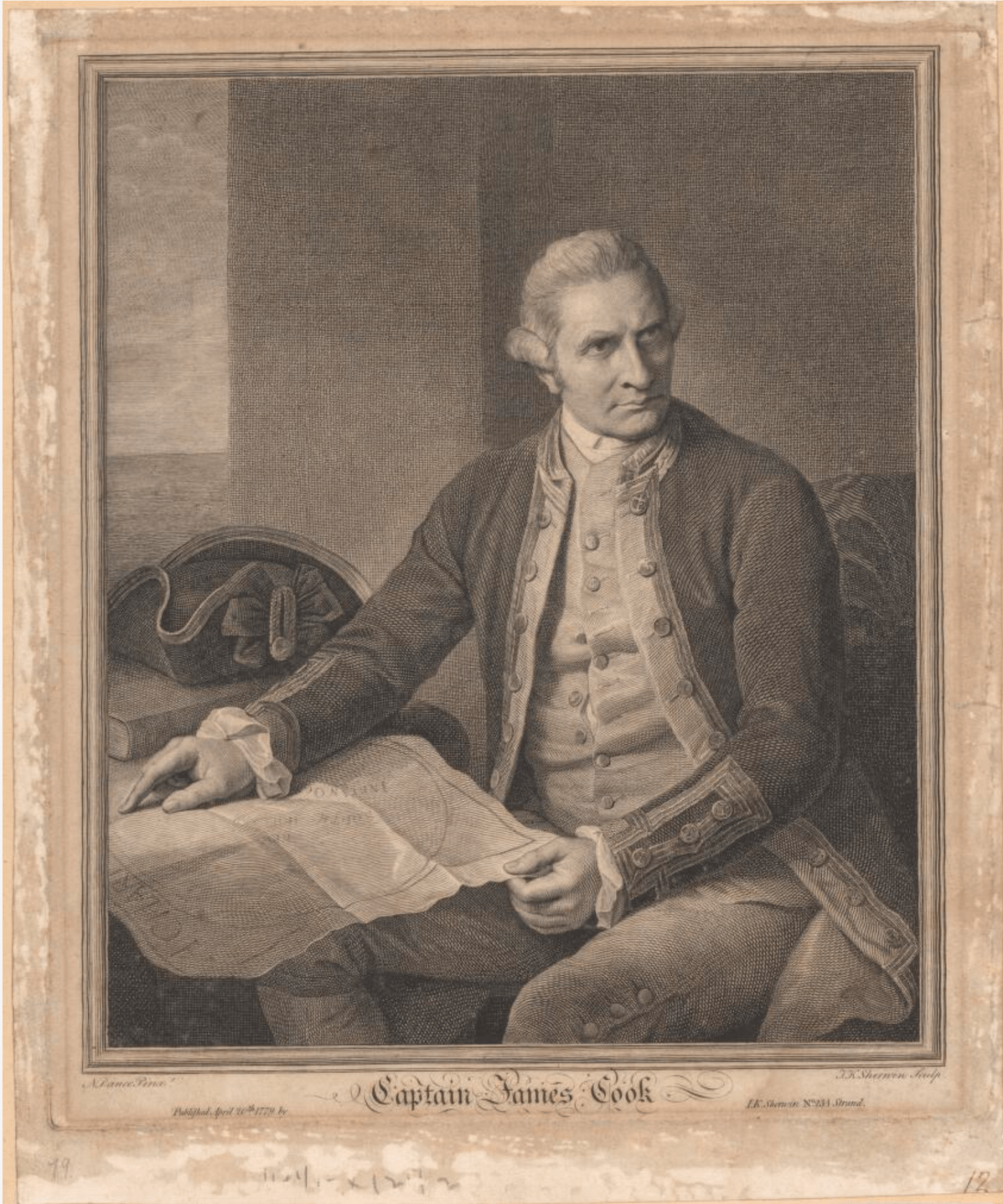
In the annals of maritime history, few names resonate with the same reverberating impact as that of Captain James Cook. A master navigator, explorer, and cartographer, Cook’s voyages across uncharted waters have left an indelible mark on the map of human knowledge. Among his many exploits, one of the most significant was his exploration and mapping of the eastern coastline of Australia in 1770, an achievement that not only reshaped geographical understanding but also profoundly influenced the course of Australian history.
The year was 1770 when Cook, aboard the HMS Endeavour, embarked on a mission commissioned by the Royal Society and the British Admiralty. His task: to observe the transit of Venus across the sun, a rare astronomical event that held profound scientific implications. However, Cook’s ambitions extended far beyond this celestial spectacle. Equipped with a spirit of exploration and a relentless thirst for discovery, he set his sights on uncovering the mysteries of the uncharted lands of the Southern Hemisphere.
Sailing across the vast expanse of the Pacific Ocean, Cook and his crew faced countless challenges, from treacherous reefs to unpredictable weather. Yet, through sheer determination and navigational prowess, they pressed onward, inching closer to the shores of Terra Australis Incognita – the fabled southern land whose existence had long tantalized European explorers.
It was on the 19th of April, 1770, that Cook first sighted the eastern coast of Australia, marking a pivotal moment in the history of exploration. Over the ensuing months, he meticulously charted and mapped the coastline with astonishing precision, documenting its contours, landmarks, and natural features with unprecedented accuracy. From the rugged cliffs of the Great Dividing Range to the sandy shores of Botany Bay, Cook’s cartographic efforts provided an invaluable foundation for future navigation and colonization.
But Cook’s significance transcends mere cartography. His voyages heralded the dawn of a new era in Australian history, one characterized by European exploration, colonization, and interaction with indigenous peoples. While Cook’s arrival on the continent undoubtedly had profound and often tragic consequences for Australia’s indigenous inhabitants, it also marked the beginning of a process of cross-cultural exchange and the forging of new identities.
Moreover, Cook’s exploration of Australia’s eastern coastline laid the groundwork for subsequent British colonization and settlement. In the decades that followed his voyage, waves of British settlers would flock to the shores he had charted, seeking new opportunities and a fresh start in the far-flung corners of the British Empire. The establishment of British colonies, from New South Wales to Queensland, would reshape the landscape – both physical and cultural – of Australia forever.
Yet, Cook’s legacy is a complex and contested one. While celebrated as a hero in many quarters, he is also a figure fraught with controversy and ambiguity. His encounters with indigenous peoples, marked by misunderstanding, violence, and dispossession, have come under intense scrutiny in recent years, prompting a reevaluation of his place in the pantheon of Australian history.
Nonetheless, there can be no denying the profound impact of Cook’s exploration and mapping of Australia’s eastern coastline. His voyages opened up new horizons, both literally and figuratively, and laid the groundwork for the transformation of a vast and untamed land into a modern nation. Whether viewed through the lens of exploration, colonization, or indigenous history, Captain James Cook remains an enduring and enigmatic figure, whose legacy continues to shape the contours of Australian identity to this day.
 History Class Australia
Leave a comment